Beverly’s cubicle at Vanguard was where fourteen years of fixing things got reduced to one sheet of paper. I set the overtime report beside her bottle of pink nail polish: 127 hours, $8,642.37. She didn’t look up.
I’m 52, and I’ve worked in infrastructure at Vanguard’s Bakersfield office since the year our server room still had a beige computer nobody wanted to touch. I knew which distribution line would fail when a backup switched over, which client systems were held together by old patches, and who to call when an overnight update went wrong. I was proud of knowing. That was part of the trouble.
The work was supposed to be shared. In practice, two people left, one position stayed empty, and the emergency list kept ending with my name. I covered because I knew how. Then I covered because the other choice was letting a client go down. By the time I admitted the pattern, everybody had started calling it “being dependable.”
Beverly called it “the way things get done.” She wasn’t a yeller. She was tidy, polite, and very good at turning a decision into a rule nobody could argue with. If I asked about the after-hours rotation, she’d say, “We’ll get to that.” If I asked about extra pay, she’d say, “Send me the hours.”
So I sent them. I had the dates, the task notes, and the system alerts to back it up. The 127 hours covered three months of late nights, weekend fixes, and the Saturday I left my dad’s 75th birthday dinner because Apex Logistics’ distribution lines were failing.
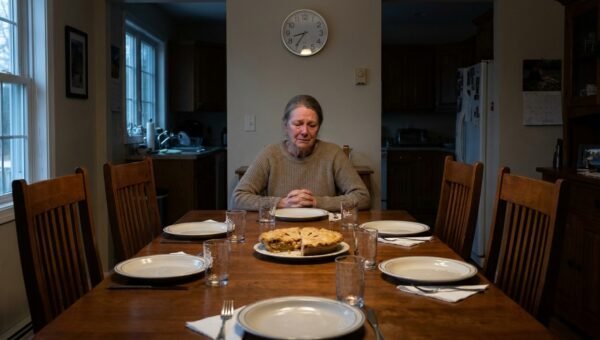
I remember the little burnt bit of cheese on my dad’s lasagna. I’d been halfway through a second piece when my work phone rang.
Dad said, “Go ahead. I know how it is.” I said I’d be back soon. I wasn’t. That night I got the lines working, and by Monday everyone was relieved. Nobody asked whether I made it back to dinner.
I told myself I was doing the right thing. To be fair, the systems mattered. Trucks weren’t moving while those lines were down, and the client had people waiting on deliveries. But I also liked being the person who could fix it. I liked hearing, “Can you take a look?” It made me feel safe at work, which is a funny way to describe a job that kept eating my weekends.
By the time I put the report on Beverly’s desk, I’d already followed the steps she asked for.
I’d separated the hours by pay period and attached the incident notes. I’d even checked the total twice, because I knew she’d look for a reason to send it back.
She kept painting her nails. The brush made a small scratchy sound against the bottle.
“There’s no approval,” she said.
I waited for her to add something. An explanation, maybe. A question about the dates. She held her hand up to inspect the polish.
“I have the work orders,” I said.
“You need approval before the hours.”
“I was responding to outages.”
“That doesn’t change the process.”
It was a short conversation. It had a long tail. I remember thinking I’d spent fourteen years making it possible for the company to avoid hiring enough people, and now I was being told the resulting work didn’t count because no one had approved it in advance.
I could have argued. I could have asked her to put the denial in writing.
Instead, I nodded and said, “Fine.” The word came out calm. I meant it as a warning to myself, though I didn’t understand that yet.
At 4:43, I saved my open work and signed out. I had always stayed until the next problem was handled, even when my shift was over. That day, I watched the clock move toward five and felt sure I was finally doing something sensible. I thought the company would see the gap and understand what it had asked me to carry.
At exactly 5:00, I shut down my laptop and locked it and my work phone in my desk drawer. I took my purse and left. No laptop bag. No vibrating phone in my pocket. I didn’t stop by Beverly’s cubicle or tell the team I was going.
The evening was ordinary. I heated leftovers, watched half of a local news story, then shut off the television. My personal phone was at home, face down. I could have turned it on. I knew that. I didn’t.
I’ve replayed that choice enough times. I wasn’t trying to hurt the junior staff. I wasn’t trying to make Apex miss a meeting. I was angry, and I wanted the company to feel what happened when I wasn’t there to catch the next falling thing. I thought one night would be enough to make them notice. I was wrong about what they’d notice first.
By 8:00 the next morning, the Bakersfield office was already in motion for the Apex presentation. The meeting was set for nine. Apex was considering a $500,000 service extension, and I’d built most of the technical plan over the prior six weeks. A few people knew the slides. I was the only person who knew why the numbers on them were safe to promise.
I didn’t know any of that then. I was still at home, having coffee and trying not to pick up my personal phone. I knew the presentation was scheduled. I also knew I wasn’t on call, and that my work laptop and phone were sitting in my locked drawer. I’d made the boundary clear, even if only to myself.
At the office, my team tried to fill in the gaps. One of the junior analysts, Joel, told me later he asked Beverly where the failover notes were. She told him, “They’re in the shared folder.” They weren’t. Some were in old tickets, some were in a notebook I’d kept beside my desk, and some were details I’d never written down because I thought I could explain them faster than I could document them.
That part isn’t Beverly’s fault alone. I had made myself a bottleneck. I’d corrected people instead of teaching them, because I was tired and it was quicker to do it myself. The job had trained me to think that being needed was the same as having security. I helped build the trap I was angry about.
At 8:51, Marcus Vance came out of his office and asked why the test data didn’t match the deck. Beverly said I was “handling it.” Someone pointed out my desk was empty. That was when she checked her phone and saw the messages she’d sent the night before had gone unanswered.
The Apex director joined the speakerphone at nine. His name was Frank, and he’d sat through enough project calls with me to know when someone was guessing. I heard his voice later from the recording Marcus played for me.
“Is Denise there?” Frank asked.
Beverly said, “She’s unavailable this morning.”
“I need Denise for this presentation.”
“We can walk you through the plan.”
“No,” Frank said. “You can’t.”
Marcus started speaking over her, but Frank cut in. “We’re not approving half a million dollars based on answers nobody can support.”
Nobody had to tell me what came next. The call ended without a decision. The meeting was supposed to be the last step before the extension. Now Apex wanted to pause the review until I was available.
Marcus shouted my name across the office floor. Not once. Several times. The people who’d been asking me for small fixes for years heard him. Beverly heard him, too.
At 9:24, I turned on my personal phone. There were 13 missed calls and six messages. I didn’t read them all. The first from Joel said, “Apex wants you on the call.” The next from Marcus said, “Call me now.” I sat there for a minute before I went in, which was petty, honestly. I wanted to make them wait the way I’d waited for approval.
When I walked into the office, Marcus came straight toward me. His tie was loose, and he was holding the presentation folder by its bent corner.
“Where have you been?” he said.
“I was off.”
“We need you on Apex now.”
“You needed me yesterday, too.”
He looked like he was about to argue, then stopped. “The account is at risk.”
“I know what the account is worth.”
Beverly came over, holding my overtime report. The top page had a crease down the middle.
“I didn’t know this would happen,” she said.
I looked at the report. “You knew I’d done the hours.”
She didn’t answer. That was the first time I saw her look unsure of what to say.
Marcus asked me into the conference room. I agreed, but I didn’t sit down until I had my own conditions written on the whiteboard. I wanted the full $8,642.37 approved for the next payroll. I wanted a written apology from Beverly. And I wanted a new role, with an on-call schedule, a backup person trained for every system I covered, and no expectation that I’d answer after hours unless I was scheduled and paid.
Marcus said, “We can talk about the role.”
“No,” I said. “We can agree to the role.”
He rubbed his forehead. “You’re putting the client in the middle.”
“I didn’t put the client in the middle. I didn’t build a process that depends on one person and then deny the person’s hours.”
The words came out flatter than I expected. I was glad. I didn’t want to perform anger for them. I wanted them to have to deal with the facts.
Marcus asked Finance to pull the overtime record and the approval history. I expected a debate over dates. Instead, the finance manager opened a note attached to the request. It was from Beverly, sent three days before she rejected it.
The note said the department had already missed its labor target for the quarter. It asked payroll to hold the overtime until the next quarter so the current numbers would “close clean.” She’d denied the hours not because the work hadn’t happened, but because paying me would make her department’s budget look worse.
I read it twice. Then I looked at Beverly.
“I was trying to keep the department from getting flagged,” she said. Her voice was low. “I thought we could sort it out later.”
“You could’ve said that.”
“I know.”
That was all she said. I could see how she’d made the choice. A bad quarter meant questions from Marcus and Finance. She’d protected her numbers because she thought I would keep absorbing the cost. Understanding the reason didn’t make the choice smaller.
Marcus turned to Finance. “Approve the full amount today. Put it on the next payroll.”
Then he looked at me. “We’ll make the role change.”
“Put it in writing.”
He nodded. It was the first time I’d seen him do that without adding a condition.
Beverly wrote the apology herself before the meeting ended. She apologized for denying the hours and for treating my work as if it didn’t need to be recorded. She didn’t make excuses in the letter. I read it once, then asked Marcus to attach it to the updated role agreement.
By noon, Finance had confirmed the $8,642.37 was approved for the next payroll. The new title was Infrastructure Operations Lead, with a direct line to Marcus while management reviewed Beverly’s handling of the request. I’d have a scheduled on-call rotation, a second trained engineer, and authority to decline work outside that rotation unless a paid emergency shift was approved.
I didn’t feel triumphant. I felt like I’d finally read the instructions on a breaker panel I’d been operating by memory for years. The current work could be done safely, but not by pretending the warning labels didn’t matter.
At 2:00, Apex joined a new call. Frank didn’t bother with small talk.
“I asked for you yesterday,” he said.
“I know. I’m sorry the meeting got disrupted.”
He paused. “Can we see the failover plan?”
“Yes. I can take you through it.”
This time, Joel was on the call with me. I explained the system, and I made him walk through the backup path. He stumbled once. I didn’t take the answer from him. I waited while he found it. Frank asked hard questions, and we answered them. Apex agreed to continue the extension review, with the $500,000 service plan moving forward once the revised schedule was signed.
The team’s work didn’t become easy overnight. It took weeks to document the systems and get Joel trained. I had to stop myself from grabbing the keyboard every time he paused. There were evenings when I saw a message come in and felt that old pull to fix it before anyone noticed. I left it for the scheduled person.
Beverly still worked in the office. We were polite. She stopped sending me late requests with “when you get a minute” in the subject line. Marcus made sure the new rotation was posted where everyone could see it. The budget review found other problems, too, but I wasn’t the one asked to hide them.
The payment came through on the next payroll, exactly $8,642.37 before deductions. I took the pay stub home and put it with my tax papers. I didn’t frame it or tell my dad I’d won. I did tell him I was sorry I’d left his birthday dinner. He said, “I know, kid,” and passed me the potatoes.
A week after the walkout, at exactly 5:00, I locked my desk drawer. My work phone and laptop were inside. I slid my personal phone into my pocket and walked past the quiet office, with the evening sun still clear outside.