I was putting sugar in Julian’s coffee when the gate camera lit up on the kitchen screen. My mother was standing outside it with a folded piece of paper in her hand. I’d spent the week learning what was on that paper, though I didn’t know the exact words yet. I knew why she’d come.
Nine years earlier, she’d stood under the porch light at my parents’ house and told me to cancel the wedding or never come home again.
I remember the porch bulb buzzing, and the way she kept smoothing the front of her blouse while she waited for me to answer. She didn’t yell. She didn’t have to.
I chose Julian. My mother and father, Earl, stopped calling after the wedding. No Christmas cards, no birthday messages, nothing. When our son, Owen, was born, I mailed them a photo. I wrote his name and birthday on the back. They didn’t reply.
For a long time, I told myself I was fine with that. Mostly I was. Julian and I were busy building a life, and I didn’t want to keep dragging the old hurt through every room we lived in.
Julian built his company with a small team and long days. I handled some of the early bills and did what I could around Owen’s schedule. There were times we ate dinner late because Julian was still on a call, and times I got mad at him for working through a Saturday.
I wasn’t some saint standing by while he did everything. We argued about money and sleep and who’d forgotten to buy milk.
But we were a family. That was the part my parents had said I was giving up.
One month ago, Julian’s face showed up on the cover of two business magazines. His company had grown fast, and the articles made a lot of noise about its value. I was proud of him. I was also uneasy in a way I didn’t want to admit. I’d seen what attention did to people. My mother had always cared about who was invited, who had the bigger house, who got mentioned in the paper.
Still, when Owen came running into the kitchen with one of those magazines, I laughed. He said his dad looked serious on the cover. Julian told him he was trying to look smart. It was a good night. I wanted it to stay that way.
Then my aunt Celia called.
Celia was my mother’s sister. She’d sent me a card after Owen was born, though she’d never been brave enough to call my parents out in front of them. Two weeks ago, she rang while I was sorting laundry. She asked if I’d heard from my mother. I said no. There was a pause, then Celia told me Earl’s business was in trouble.
She didn’t have every detail. She knew the firm was behind on payments, and she’d heard there were questions about money that had gone missing. She said my parents’ house was in foreclosure. Her voice got low when she told me my mother had been asking relatives whether Julian was really as successful as the magazines claimed.
I didn’t answer right away. I was holding one of Owen’s socks, the little kind with the heel worn through.
I remember that, for no good reason. I asked Celia if she thought my mother was planning to call.
“I think she’s scared,” she said.
That might have been true. It didn’t mean she was sorry.
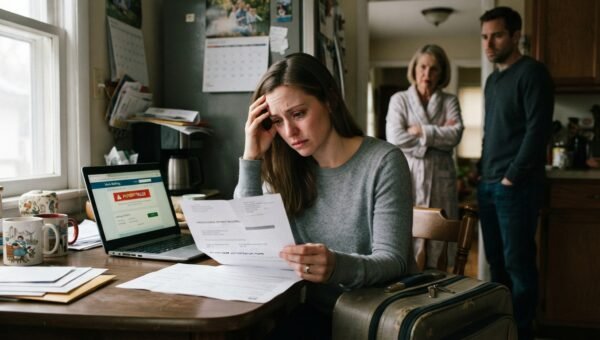
I didn’t want to take gossip as fact, so I checked public records. I’m not a lawyer, and I’m not good at this stuff. I had to read the same pages over and over, and I got some of it wrong the first time. But the court filings were there. So were the liens. The foreclosure notice showed the house was headed toward auction. The business records showed debt and a legal claim tied to money Earl’s firm had handled.
The numbers were what stuck with me. The amount due on the house. The liens. The date of the hearing. I wrote them on a pad beside my laptop, then checked them again the next morning. I kept hoping I’d misunderstood. I hadn’t.
I told Julian that evening after Owen went to bed. I said I didn’t want to make a big thing out of it, which was a lie. I’d been thinking about it all day. Julian listened, then asked if I wanted him to contact a lawyer. I said not yet. I didn’t want to give my parents a reason to say I was trying to punish them.
That was me, still trying to be fair to people who hadn’t been fair to me.
Julian asked what I wanted to do if my mother showed up. I said I didn’t know. He didn’t push. He just reminded me that nobody could come through the gate without us letting them in, and that the camera saved the footage.
The gate had been part of our house plan from the start. Not because we expected trouble. We just liked having a clear edge between the street and the yard. I’d thought of it as a practical thing, the kind you stop noticing once it’s in place. That week, I noticed it.
The next morning, I looked at the public records again. Then I went through the camera settings and made sure the recording was working. I wasn’t planning a confrontation. I just wanted to know what was happening if my mother came back into my life without warning.
I didn’t tell Owen any of this. He knew his grandparents weren’t around. He didn’t know the details, and I wasn’t going to make him carry them before he needed to. Julian agreed.
Then, at 3:18 on a Thursday afternoon, my mother appeared on the kitchen screen.
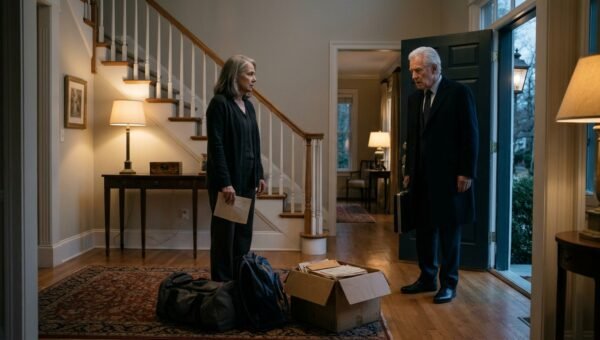
I left the sugar spoon on the counter. Julian was upstairs on a call, and Owen was at school. I walked out to the gate alone. My mother had dressed like she was coming to a nice lunch. She smiled at me as if nine years had been a mix-up we could clear up in a few minutes.
She said she’d been thinking about family. She said people made mistakes, and that family forgives. She didn’t ask about Owen. She didn’t ask how I’d been.
Then she held the paper through the bars.
I took it. My hand didn’t shake, though I’d expected it to. The list was written in her neat handwriting. A house in Fairhope. $172,640. A senior job for Earl at Julian’s company. A place for herself near the water.
I read it once. Then I read it again.
The number was the same as the amount tied to one of Earl’s debts in the filings. The house she wanted was close to the value listed for the property under foreclosure. The job for my father didn’t even pretend to be about his skills. It was a way to get him paid and keep him close to Julian’s money. And my mother wanted her own place, too.
She’d brought me an invoice and called it forgiveness.
My mother was watching my face. She’d expected surprise, I think. Maybe tears. Maybe a hug. I could see her waiting for me to get caught up in the word family and forget the years in between.
I asked if she’d brought anything for Owen. She said she’d thought we could all talk later, once we’d settled the important matters. That was when something in me stopped trying to make the visit better than it was.
I told her I’d seen the filings. The foreclosure. The liens. The court case about Earl’s business. I said the list matched the debts. I didn’t raise my voice. I didn’t need to.
For a second, my mother kept her smile. Then it fell apart. She said the filings didn’t tell the whole story. She said Earl had made mistakes, but that people were making it sound worse than it was. She said Julian had enough to help.
She didn’t deny the list.
I’d watched my mother smooth her blouse under that porch light nine years earlier. I’d seen the same small motion when she stood at our gate. She did it now, too, as if she could press a crease out of the day and make it go back to how she wanted it.
I had been saving a sentence in my head for years. I thought I’d use it if she ever came back. When she did, it didn’t come out the way I’d practiced.
I looked up at the camera and smiled, just a little. “Good,” I said. “Because you’re going to need forgiveness for what comes next.”
I told her I wasn’t giving them money, a house, a job, or anything else. I said the records were public, and the camera had recorded the whole visit. I wasn’t threatening to show the footage to anyone. I was saying she couldn’t tell a different story later and expect me to keep quiet.
My mother said I was making this ugly. I said it had been ugly for a long time. I told her the only thing I was ending that day was the idea that she could call silence a mistake and then hand me a bill.
She looked down at the list. Then she looked back at me and said she was my mother.
I said I knew.
That was all. No argument, no second chance talk, no promise to call. She stood outside the gate with the paper in her hand. I closed it, and the lock clicked into place.
I saved the camera footage that night. I also saved the records I’d pulled, not because I wanted to build a case against my parents, but because I knew how fast they could turn a plain truth into something else. They got no money from us. They had to face the foreclosure and the business claims on their own.
Celia called a few days later. I thanked her for telling me. She said she was sorry. I told her I knew she’d tried to help when she could. That was the whole conversation.
I didn’t feel happy about what happened to my parents. I didn’t feel sorry enough to step in, either. I’d spent years thinking the hurt was the part that kept me tied to them. Turns out the harder part was admitting I didn’t owe them a way out.
That night, Julian came into the kitchen with a cup of coffee. He set it down and put his arms around me and Owen. Outside, the sun was going down. The gate was locked. Inside, the coffee was still warm.