The second red line was already clear when I saw the pregnancy test on our kitchen table. Pam was rinsing a mug at the sink. I’d just come in from the garage, and my work gloves were still in my back pocket. She turned around and said, “I’m pregnant, Marcus.” I looked at the test, then at her. “Okay,” I said.
I didn’t say what came straight into my head: I’d had a vasectomy fourteen years earlier.
The paperwork was in the locked drawer in my home office, in the same folder as the instructions they gave me afterward. I knew the date without checking. I knew the doctor’s name, too. I guess that’s the first thing people want to know. Why didn’t I tell her right then?
Because I wanted to be sure what I was dealing with before I made a mess I couldn’t take back.
Pam sat down and put both hands around her mug. “You’re not happy?”
“I’m surprised,” I said.
“That’s fair.”
She smiled a little, like she was trying to make it easier for me. I smiled back. I wish I could say I was thinking only about the baby, or about how we’d manage another child after all this time. I was thinking about that locked drawer. I was also thinking that if I accused her and got the facts wrong, I’d have to live with that.
So I picked up the test, set it back down, and asked if she felt all right.
She said she did. She was tired, she said. Her period had been late. It had not crossed her mind that this could happen. I said, “We’ll figure it out.” Then I made coffee, though I don’t remember drinking any of it.
Pam and I had our daughter, Grace, fourteen years earlier. I had the vasectomy after Grace was born because we both said our family was the right size. It wasn’t a rushed decision. I remember waiting in the clinic room with my boots on the floor and my shoes tucked under the chair. I remember the paper gown bunching up behind my knees. The doctor explained the procedure and the follow-up test. I did the follow-up. I was told the result was clear.
The records stayed in my desk drawer. I never needed them again, but I kept them.
I keep too much paperwork. Old receipts, appliance booklets, every instruction sheet that comes with a thing. Pam used to tease me about it. “You could find the manual for a toaster we threw away ten years ago,” she’d say.
I’d tell her, “Might need it someday.”
Grace had asked for a brother or sister when she was little. She asked a few times, mostly after seeing babies at church or at the grocery store. We told her she had us, and that was our family. At some point she stopped asking. I didn’t notice the exact day. She just gave up on it, the way kids do when they understand the answer won’t change.
When Pam told her about the pregnancy, Grace was quiet, then said, “That’s weird. I thought you couldn’t have more kids.”
Pam looked at me. I said, “We’ll talk about it later.”
I said it too sharply. Grace shrugged and went upstairs. I felt bad, but I didn’t follow her.
I was afraid of what I might say if I had to explain the part I already knew.
The first appointment was a week later. Pam asked if I wanted to come along. I said yes. The clinic waiting room had a bowl of peppermints by the check-in desk, and the wrapper on mine stuck to my thumb. I remember that for some reason. I remember a lot of useless little things when I’m trying not to think about the thing in front of me.
The nurse went over dates and asked about Pam’s health. I sat beside her and held her coat. When the doctor came in, I asked whether pregnancies could happen after a vasectomy. I asked it in a general way, like I was making conversation.
“It’s possible, but it’s rare,” the doctor said.
Pam glanced at me. “See? It happens.”
I nodded. I didn’t bring up my records. I didn’t tell her the follow-up test had confirmed the procedure worked. I just asked how far along she was and what the next appointment would be.
Afterward, Pam was hungry, so we stopped for sandwiches. She talked about baby names. I listened. I said I liked one, then changed my mind when she asked why. I guess I was trying to keep us moving along a road I didn’t believe we were on.
At home I opened the office drawer once, then shut it without taking anything out. I could have put the records on the table that night. I could have asked Pam to explain. Instead, I told myself I needed more than a question and an old medical form. That sounds sensible when I write it down. It also gave me somewhere to hide.
The pregnancy went on, and I went to the appointments. I bought the vitamins because Pam had forgotten to get more. She was sick most mornings, so I kept crackers on the counter and rubbed her back when she leaned over the sink. Some days she thanked me. Some days she said, “You don’t have to hover.”
“I’m not hovering,” I’d say.
“You’re standing right there.”
“Fair enough.”
People heard the news and congratulated me. At the feed store, a man I’d known for years slapped my shoulder and said, “Starting over, huh?” I said, “Something like that.” At church, one of the older women told Pam she must be thrilled to give Grace a sibling. Pam smiled and said, “We all are.”
I smiled too. I’m not proud of that part. I was helping maintain the picture because I didn’t want to be the person who cracked it open without proof.
At home, there were small things I noticed and then tried to talk myself out of noticing. Pam kept her phone with her more than she used to. She’d take it outside when it rang, even if she was in the middle of folding laundry. When I asked who called, she’d say, “Work.” She had a few friends from her job, so that answer didn’t mean anything by itself. Not enough to say out loud, anyway.
One afternoon, I came into the kitchen and heard her say, “Not now.” She ended the call before I could ask. She put the phone face down and started talking about Grace’s school schedule.
“Who was that?” I asked.
“Just somebody from work.”
“All right.”
She looked at me longer than she needed to. “You’ve been strange lately.”
“I’m tired.”
That wasn’t a lie. It just wasn’t the whole answer. By then I was counting months and weeks in my head, checking the dates against the procedure and the pregnancy. I wasn’t trying to catch her in a mistake. I was trying to make room for an explanation that didn’t leave me looking at my own kitchen table like a stranger.
Grace asked me one night if everything was okay between us. She was sitting on the edge of the couch, scrolling her phone with one hand.
“Why wouldn’t it be?” I said.
“You and Mom are acting weird.”
“We’re dealing with a lot.”
“Okay,” she said, in the same flat way I’d said it to Pam.
I almost told her. I almost said there was something in the desk drawer that might change the way all of us looked at this baby. But she was fourteen, and whatever had happened between her mother and me wasn’t hers to carry. I told her we were fine. She looked down at her phone again. I let her.
By the last month, I had started to feel like I was working a fence line with one post leaning. I could keep it standing for now, but I knew I’d have to deal with it. I still didn’t know what the full truth was. I only knew what the medical records said about me.
When labor started, I drove Pam to the hospital. She grabbed my wrist in the car and said, “I’m scared.”
“I know,” I told her. “I’m right here.”
I was right there through the delivery. I cut the cord when they asked. Then a nurse handed me the baby, a boy with a tiny red mark across one cheek. He made a short, annoyed sound, then settled against my shirt. His fingers curled around the edge of my thumb.
Pam was exhausted. She looked at us and whispered, “He’s our son.”
I nodded.
I didn’t say, “Is he?” I didn’t say anything at all. There was no way to answer that question honestly in a hospital room with a newborn in my arms. I held him until the nurse needed to take him, and I kept my face calm because he hadn’t done anything wrong.
The day after we came home, I called a lab and asked how to arrange a paternity test. I made the call from my truck and kept my voice low. They explained what they needed. I asked if the results would be sent by mail. They said they would.
I took a sample the way they instructed. I didn’t tell Pam. I know that was a choice, too. I didn’t do it because I wanted to punish her or because I thought the baby owed me proof. I did it because I couldn’t live inside that question anymore. For once, I wanted something that didn’t depend on what anyone said.
That week was full of the usual baby things. A pediatrician visit. Laundry that never seemed to end. Pam sleeping in short stretches. I changed diapers, warmed bottles, and took my turn holding the baby when he fussed. The work was real, and so was my care for him. I don’t know how to make those things fit beside what I suspected. They were both there.
The envelope arrived seven days after I mailed the sample. I brought it to the car before I opened it. I sat in the driver’s seat in the driveway with the mail on my lap. The baby’s bottle was on the passenger floor, empty. I had forgotten it there after an appointment.
I opened the envelope and read the report. The words were plain. The test excluded me as the biological father. The chance I was his father was zero.
I read it again. Then I folded the paper once, badly, because my hands weren’t doing what I wanted. I looked at the steering wheel. I could hear the dryer going in the house. That was all.
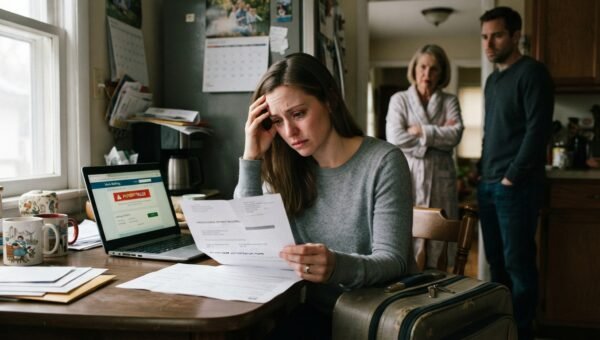
I went inside with the report and the old records from my desk drawer. Pam was at the kitchen table. The baby was asleep upstairs. I put both sets of papers in front of her.
She looked at the DNA report first. Then at the medical records. She didn’t pick either one up.
“Where did you get this?” she asked.
“I had him tested.”
“You tested our baby?”
“I needed to know.”
She pressed her lips together. Then she said, “I thought maybe the surgery could fail.”
“It didn’t.”
“I didn’t know what to do.”
“You could’ve told me.”
She covered her face with both hands. I waited. I wanted an explanation, but not one that would make the report less true. After a while, she said, “I’m sorry.”
I believed she was sorry. I also knew sorry wasn’t an answer to how long she’d known, or why she let me sit through every appointment and smile at people congratulating me. I asked her whether she knew the baby wasn’t mine.
She lowered her hands. “Yes.”
I sat down across from her. The kitchen chair made the same small scrape it always made on the floor. I remember that sound, too.
She tried to explain. She said she’d been scared. She said she thought she could make it work. She said she loved me. I let her talk, but I didn’t ask who the father was. I wasn’t ready to hear another name, and I wasn’t sure it would change anything I needed to do.
“I can’t stay married to you,” I said.
“Marcus, please.”
“I’m not going to pretend this didn’t happen.”
She reached for the report. I slid it back toward myself. Not to keep it from her. I just wasn’t ready to have her take it out of my hands.
We talked about the baby. I told her I wouldn’t take my anger out on him. He was innocent. I would make sure he was cared for while we sorted out what came next. But I wasn’t going to raise him as if nothing had happened between us, and I wasn’t going to stay in the marriage just to keep up appearances.
The next morning, I called a lawyer and started the separation process. Pam and I made arrangements for the baby, and for Grace, who heard enough to know the marriage was ending. She didn’t ask many questions. She said, “I knew something was wrong.”
I said, “I’m sorry I made you worry.”
She looked at the papers on the kitchen table. “Is the baby your son?”
I took a breath. “He’s your brother. I’ll always care what happens to him. But I’m not his biological father.”
She nodded once. She didn’t ask me to say more.
The house got quiet in an ordinary way after that. Pam stayed while we worked out the next steps. We talked about bills, schedules, and who would be where. We didn’t shout. Maybe that made it easier to get through the practical parts. It didn’t make the hurt smaller.
I put the DNA report and the vasectomy records back into the same folder. For fourteen years, those papers were just something I kept because I keep things. Now they were the reason I knew I wasn’t making it up. They were also the reason I couldn’t go back to pretending.
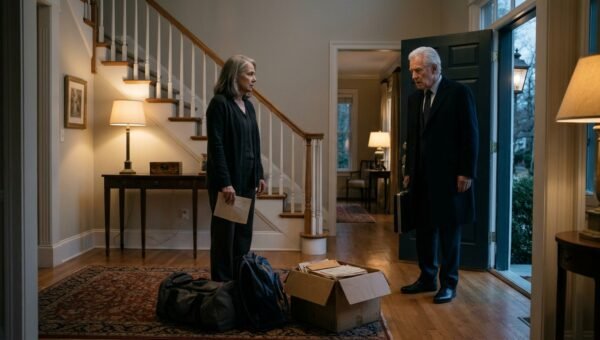
I placed the folder in my desk drawer and turned the key. Then I walked out the front door into the quiet evening air.