The front step of my house is where I told Julian I hated his mother.
He’d been standing there with a worn leather portfolio tucked under one arm. He looked enough like Evelyn to make my body react before my brain caught up. Same narrow chin. Same way of holding his mouth when he was trying not to say too much.
“It’s finally time for you to know,” he said.
I had been waiting fifteen years to hear something from her. I hadn’t expected it to come through him.
I also hadn’t expected to say, “I don’t want to hear her excuses.”
Julian nodded. He didn’t argue. That made me feel meaner, not better. The cold wind kept pushing at the open door, and I moved aside before I could change my mind.
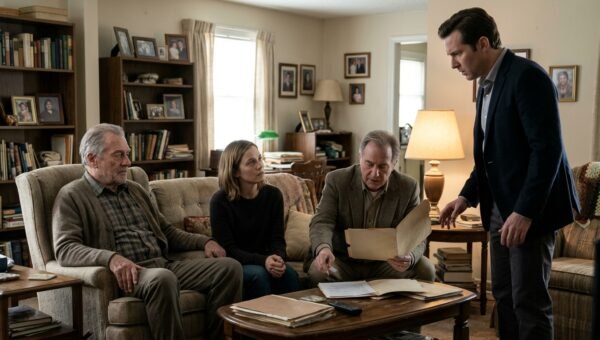
I work nights at a hospital, so I’m used to being the person who tells families the hard part in a plain voice. I can say, “The doctor’s on the way,” and keep my hands busy with a chart. At my own kitchen table, with that folder between us, I couldn’t find a useful thing to do with my hands.
Julian set the portfolio down. The leather had worn pale at the corners. He kept one palm on it, like he might need to stop it from sliding away.
“My mom died last month,” he said. “She made me promise I’d come here after.”
I didn’t say I was sorry. I wish I had. Back then I thought every kind word about Evelyn would be a betrayal of Dad.
Dad died at 45. It was a massive heart attack, sudden and ordinary in the way awful things sometimes are. He’d been up early, making coffee. I remember the spoon he left in the sugar bowl, handle sticking out. I remember that more clearly than the funeral.
Evelyn had been married to him for twelve years. She’d helped raise me, packed my lunches, and once sat up most of the night when I had pneumonia because I kept asking if Dad was coming home from work. I loved her, or I thought I did. Then Dad died, and she didn’t cry in front of me. She took Julian and left the next day.
That was the whole story I had.
She didn’t hug me. She didn’t say, “Call if you need anything.” I watched her carry two bags to the car, and she looked so calm I decided she hadn’t loved Dad at all.
For years I repeated that version to anyone who asked. It was easier than admitting that I’d wanted her to stay and she hadn’t.
Julian moved his hand off the folder. “I know what it looked like.”
“No,” I said. “You know what she told you. I was there.”
He looked down at the table. “She didn’t tell me everything.”
That was the first thing that made me listen.
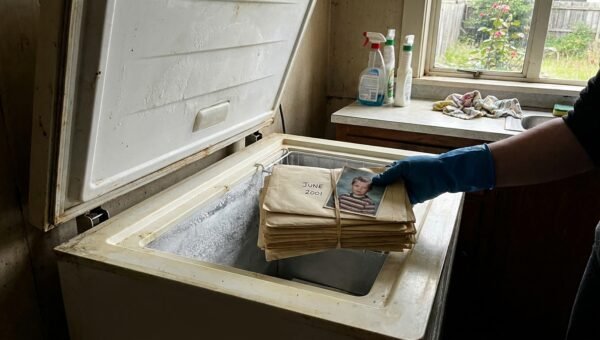
Julian opened the portfolio and pulled out a stack of papers held together with a rubber band. He had organized them by date. I could tell because the corners had little pencil marks, the kind you’d make if you were scared of losing your place.
He slid the first page toward me.
It was a deed disclaimer. Evelyn’s name was at the bottom in the precise handwriting I remembered from permission slips. The date was thirty-six hours after Dad died. The document said she gave up any claim to the family home.
The house, which Dad had put in my name years before, was mine alone.
I read it twice. My thumb caught on the raised seal.
“Why would she sign this?” I asked.
“Because the house was the only thing Dad kept out of the mess.”
I looked at Julian. He took a breath and started explaining, stopping once to rub at his forehead. Dad’s small business had been going under for years. He had taken out loans, signed guarantees, and borrowed against things Evelyn had brought into the marriage. He hadn’t told me. He hadn’t told her how bad it was until the creditors began calling.
I wanted to say Dad would never do that to us. I nearly said it. But the papers were there, and Julian wasn’t enjoying this. His voice kept catching on the dates.
“What kind of debt?” I asked.
“Enough that she spent eight years in court.”
He showed me collection notices and court records under Evelyn’s maiden name. There were accounts she’d signed for, and loans Dad had put in both their names. There were letters from attorneys. One notice had a date less than a week after the funeral. I stared at the amount but couldn’t make myself say it out loud.
The papers didn’t say Dad had meant to hurt anybody. They showed what he’d done. Those are different things, I know. It took me a long time to let them be different.
Julian said the creditors came looking for anything connected to the estate. If Evelyn stayed and tried to claim a share, probate could drag on and put the house in the middle of the fight. Dad had already deeded it to me. She signed away whatever claim she could have made and left before the lawyers had a reason to tie her to the house.
“So she took the debt?” I said.
“She took the part she’d signed for,” he said. “She didn’t want them coming after you.”
I felt angry again, because anger was familiar and the truth wasn’t. “She could’ve told me.”
“She thought you’d try to pay.”
I almost laughed at that. I was fifteen when Dad died. I had no money to pay anybody. But Julian said I’d already been telling people I’d take care of everything, and I remembered saying it. I’d said it at the funeral, like a child making a promise to a room full of adults.
He said Evelyn was afraid that if I learned the truth, I’d think Dad had failed me. She believed I needed one parent left intact. I hated how much that sounded like something a person might actually do. It didn’t make the leaving kind. It only made it less simple.
I asked why she’d looked so cold. Julian didn’t answer right away. He opened the folder again and took out a small envelope with my name on it. I recognized Evelyn’s writing before I even touched it.
There was a letter inside, folded into thirds. I could tell she’d pressed the folds flat over and over. Julian sat back while I opened it, giving me room without leaving.
I’m not going to copy the whole letter here. I’ve read it enough times that I can hear where she paused, and I don’t want to turn it into a speech. She wrote that she’d loved Dad, and that loving him hadn’t stopped her from being scared and angry. She wrote that he’d hidden how far the business had fallen because he thought he could fix it before I found out.
Then she wrote about leaving.
She said she knew I would hate her. She thought that was something I could survive. She didn’t think I could survive believing that Dad had brought the family down and that I was part of what he’d been trying to save. I had to put the letter down there. My eyes were doing that thing where the words blur, and I was tired of pretending I could keep reading.
Julian’s coffee had gone untouched. Mine had a skin over the top.
“I never got to tell you,” he said. “She made me promise not to come until she was gone. She thought you’d feel like you owed her.”
I was mad at her for deciding what I could bear. I was mad at Dad for making that decision necessary. Mostly, I was mad because I’d spent fifteen years using her leaving as proof that she hadn’t cared.
“Did she ever ask about me?” I said.
“Every birthday. Every year.”
I turned the letter over, though there was nothing on the back. My fingers kept smoothing a crease that didn’t need smoothing.
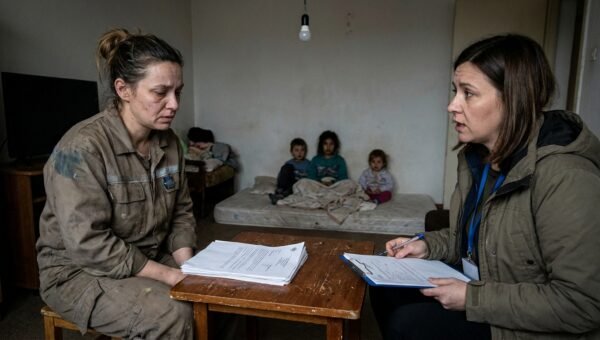
The next pages showed Evelyn had worked low-wage jobs and paid off the last settlement before she died. Julian said she’d never asked for anything from me. Not money. Not a call. Not even forgiveness. There was no secret pile of money, no plan to get the house back. Just a stack of receipts and court papers from a life she’d kept separate from mine.
It was ugly to learn that my father had put her in that position. I’d spent my whole life treating him like the one person who would never make a selfish choice. He’d loved me. He’d also borrowed against Evelyn’s credit and hidden it. Both could be true, even if I wished one of them weren’t.
I didn’t have a graceful apology ready. I don’t think those exist. I told Julian I was sorry I’d blamed her without knowing what she was carrying. I told him I should’ve let him come to the door years ago, though he’d never tried. He said he’d been a kid when she left, and he’d believed her when she said silence was the safest thing.
“I don’t know how to make that right,” I said.
“You don’t have to make it right tonight.”
It wasn’t forgiveness for everything. It was a place to begin.
When he stood to go, I asked him not to. I heard myself say it, and for a second I wanted to take it back. I’d spent so long acting like I could do without him because he belonged to her. That wasn’t fair to either of us.
He sat down again. I got two mugs from the cabinet. One was chipped near the handle, and I gave him the other one because I knew he’d hold the cup in his left hand. I don’t know why I remembered that.
We talked about Dad for a while. Not the perfect version, and not the man in the loan papers. Just Dad. Julian told me he used to bring home jelly doughnuts on Fridays. I remembered Dad letting me lick the sugar off the paper bag. We both laughed once, then got quiet.
There are still things I resent. Evelyn left without giving me the chance to understand. Dad left us with a mess and let the people who loved him sort it out. Knowing why doesn’t make those things disappear. But the papers were real, and so was her choice. She signed away the house, took the debts she’d put her name on, and let me think the worst of her.
I kept the letter.
The front door had finally shut against the wind. On the kitchen table, two mismatched coffee cups sat beside Evelyn’s smoothed-out letter.