The last ordinary thing my mother said that Saturday was, “Take your blue mug with you.” She was at the kitchen sink, rinsing it, like I was leaving for a weekend trip instead of driving out of her life.
That was four years ago. This past Saturday, I watched her read my name on the brass plate beside my office door. She had come to a building she thought belonged to her friends.
She didn’t know I worked there, or that the file on my desk was about the family she’d spent eight years trying to get close to.
My name is Mara Bell. I’m thirty-two now. For eight years, my mother, Elaine, made sure I was gone every Saturday before my brother Wade’s fiancée came over.
At 10:52, the text came.
“Be gone by 11.”
The words never changed. I’d hear the phone buzz while I was studying at the dining room table or putting laundry away. I learned to leave quickly. I kept a duffel bag in the back of my car with jeans, a sweatshirt, and a toothbrush. It was easier than asking why I had to go.
“Celeste’s family is coming by,” Mom would say. “They’re good people.”
My father, Glenn, didn’t bother with the nice part. “Just disappear for the weekend.”
I’d go to the library, a coffee shop, or sometimes my aunt’s place.
I told myself it was only one day. I told myself Wade needed the space because he was getting married. That was how I got through the first few years.
Wade was the golden child. He’d always been the one Mom bragged about, even when he was doing nothing more impressive than showing up late with a new watch. I loved him anyway. I’m not proud of how often I swallowed my anger just to keep dinner from getting awkward.
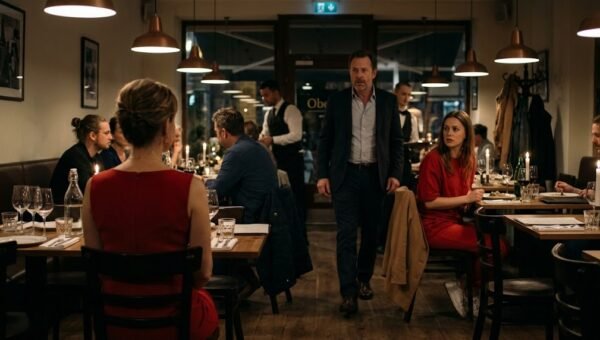
Celeste Vane came from the kind of family my mother talked about like they were royalty. Her father, Leland, owned a development company and sat on charity boards. Mom started calling him “Mr. Vane” after their second dinner together, though he was only a few years older than she was.
I noticed that. I noticed plenty. I just didn’t know what it meant yet.
At the time, I was taking architecture classes at night and working days at a small drafting shop.
Saturdays were when I studied old buildings. I had a blue mug with a chip near the handle that I took everywhere. When I came home one weekend and found it washed and waiting by the sink, I thought Mom was being kind.
Then I noticed the investor meetings.
They were always on Saturdays. I found out because I’d go to the county library and see notices posted for public planning sessions or historical society events. Celeste’s father and his business partners kept turning up in the same places. When I asked Mom why I couldn’t stay home while they visited, she said, “You don’t know how to act around people like that.”
I was twenty-four. I knew how to act. I also knew that hurt was not the same thing as proof.
So I kept going to the library. I started looking up the buildings mentioned in the meeting notices.
I liked the records better than the people. Records didn’t smile and tell you that you were being sensitive. They either matched or they didn’t.
The first thing that bothered me was an old trust deed. It covered a block of storefronts and two houses on the edge of the town’s founding district. The trust had been set up to protect the properties and keep them in local hands. But the current ownership record showed a company I’d never heard of.
I wrote the name down in my notebook. Then I saw it again on a zoning notice. Same registered agent. Same mailing address as a company owned by the Vane family.
I didn’t tell my parents. I didn’t even tell Wade. At that point, all I had was a question and a suspicion, and I knew how fast my mother could turn a question into an accusation against me.
Still, the next Saturday, I asked if Celeste’s father had invested in the old district.
Mom stopped slicing tomatoes. “Why would you ask that?”
“I saw his company name in a public filing.”
She set the knife down. “You need to stop looking for things to be upset about.”
Dad kept eating. Wade stared at his phone.
That same afternoon, I got another text from Mom. Be gone by 11. This time, I noticed the time before I noticed the words. Ten fifty-two. Just like always.
I left.
The Saturdays kept coming. I’d sit in the library with my duffel in the car and read deeds, zoning records, and meeting notes. I’d go through the old paper files with a pencil and a stack of photocopies. Some weekends, I wondered if I was trying to find something wrong with the Vanes because I resented them. That was possible. I knew I could be stubborn. I didn’t want my own hurt deciding what the records meant.
So I checked everything twice.
When I started a preservation law program, I found the rest. The Vane companies had used a chain of shell businesses to buy properties that had been held in a community trust. The public filings showed transfers made without proper approval. There were misappropriation claims buried in court records, plus a trail of payments to consultants who had helped clear the way for demolition.
The Vanes had faced a public scandal years earlier over financial manipulation. The story had quieted down. Their family had spent a lot of money making sure it stayed quiet. But the records were still there, spread across county offices and state filings.
The mentor who taught me how to read old deeds was Ellis Rusk. He’d spent his life helping local owners keep their buildings from being swallowed by developers. He died before I finished my degree. I still had his notes in a box. One of them had a coffee stain across the top and three words underlined twice: Follow the title.
So I did.
By then, I knew the company tied to the old trust was controlled by Leland Vane’s family. I also knew the development plan would wipe out the district, including the building Ellis had fought hardest to save.
I didn’t have the whole case by myself. I had counsel, records, and a growing group of people who understood the risk. But I had found the paper trail. I could connect the company names, the titles, and the zoning approvals in a way no one else on our team had.
At home, none of that mattered. Mom still wanted me gone every Saturday.
The last one came in the eighth year.
The text arrived at 10:52. I was already awake. My duffel was beside the door, packed for once with all my things, not just the weekend clothes.
Mom rinsed my blue mug and put it upside down by the sink.
“Be gone by 11,” she said.
I looked at her. “I’m not coming back tonight.”
She gave me the little laugh she used when she thought I was being dramatic. “Don’t start.”
Dad stood in the hall. He didn’t ask where I was going. “You’ll be back when you run out of money.”
That got under my skin because he knew I’d been paying my own way for years. But I didn’t argue. I put the duffel in my car and left before 11.
I drove across the state line with no job waiting and no place lined up. The first two nights, I slept in my hatchback behind a twenty-four-hour grocery store. My back hurt so badly that I spent the next morning leaning against the car door while I brushed my teeth.
It wasn’t brave, exactly. It was just the first time I’d decided that being uncomfortable was better than going home.
I enrolled in night classes, found a room in a shared apartment, and took whatever drafting work I could get. I studied architectural history and preservation law. I kept my head down. When relatives called to say Mom was worried, I said I was safe. When they said I should forgive her, I told them I wasn’t ready. Then I stopped answering.
Wade sent one message about a year after I left. “Mom says you’re making this harder than it needs to be.”
I read it twice and didn’t reply. Maybe I should have. But I was tired of being asked to make things easier for the people who’d made me leave.
Four years passed that way. I finished my degrees, built a small preservation firm, and got certified as a principal architectural historian. Our office worked with towns and local groups, not developers who wanted a quick stamp and a photo op. The work was steady, if not glamorous. I was good at it.
The Vanes’ plan came back around. Their family trust applied for permits to demolish several buildings in the founding district and replace them with a hotel and shops. We filed our findings with the town and worked with local counsel to ask for an injunction while the property titles were reviewed.
The court granted a certified injunction. The permits were frozen. The town’s legal team would handle the next steps. My job was to document the records and explain them clearly enough that the truth couldn’t be buried under polished presentations.
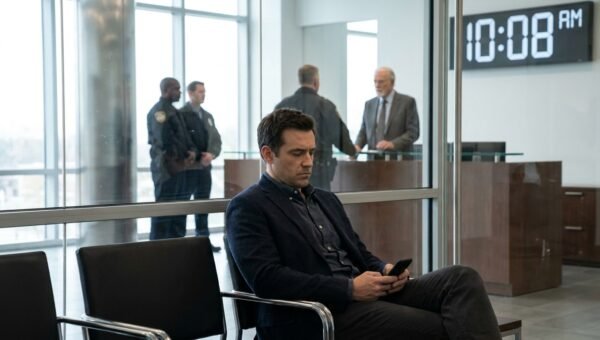
That Saturday, our office was hosting a small meeting before a preservation gala. Nothing fancy. Coffee, folders, a plate of grocery-store cookies that someone had brought in. I was reviewing the injunction papers when I heard heels in the hallway.
I knew the sound before I knew who it was.
My mother stopped outside my door. I heard her say my name under her breath. Then the latch clicked.
She opened the door. Her eyes went to the brass nameplate, then to me, then to the stamped court order on my desk.
“Oh my God,” she whispered. “You know?”
For a second, neither of us moved.
I put the papers flat on the desk. “I know what the records show.”
Mom reached for the chair but didn’t sit. “This is about Celeste’s father?”
“It’s about the trust properties and the companies that took them.”
She looked at the file. Her mouth opened, then closed. She had spent years telling me I didn’t know how to act around the Vanes. Now she was standing in my office while I held the public record tying their family assets to the land they’d taken.
“Why didn’t you tell me?” she asked.
I could have said, You never asked. I could have reminded her she’d sent me away every Saturday. Instead, I said, “You knew I was looking at the records.”
Mom looked down at her hands. “We were trying to help Wade.”
I let that sit between us. Maybe she believed it. Maybe she’d told herself that for so long it had started to sound like love.
“You kept making me leave,” I said. “You knew where I’d be.”
She didn’t answer.
I explained the filings, the transfers, and the injunction. I told her the permits were frozen pending review and that the court documents were public. I didn’t raise my voice. I didn’t need to. The whole case was in black and white, with dates, names, and signatures.
She reached toward the papers, then pulled her hand back.
“Can this be stopped?” she asked.
“The demolition? The court has stopped it for now. The review has to happen.”
“And Wade?”
“I’m not discussing Wade’s marriage. I’m discussing the public record.”
She looked at me like I’d broken some rule we’d never written down. Then she turned and walked out. I heard her heels go down the hall, slower this time.
The project stayed frozen while the review went forward. The town kept the founding district standing. Our firm’s work was cited in the public record, and the historical trust’s title was restored through the legal process. That didn’t undo what had happened to the families who lost those properties, or bring Ellis back. But it meant the old buildings weren’t going to be knocked down to make the Vane name look important.
Mom didn’t call after that. Wade sent no more messages. I heard through an aunt that Mom had told people I’d embarrassed her. I suppose that was easier than saying I’d been right.
I don’t feel proud of how long I stayed quiet. I also don’t feel guilty for leaving. Both things can be true. I miss the family I thought I had sometimes, though I can’t say I miss the Saturdays.
That afternoon, after the meeting ended, I gathered the blueprints and set the injunction back in its folder. The blue mug was on my desk. It had a small chip by the handle, same as the one I’d carried from home.
I locked the office door with my own brass key. It turned smoothly, and the afternoon light fell across the plans for a district that was still there.