
PART 1
The will reading took less than twelve minutes.
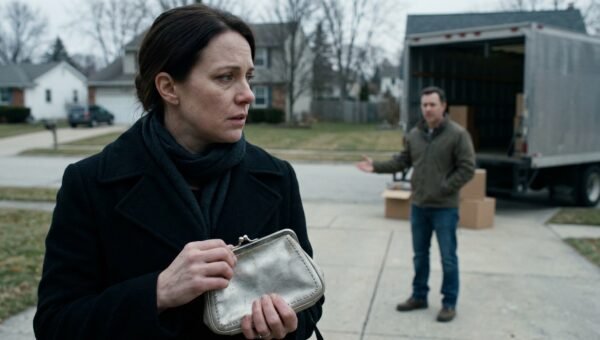
We sat in the dusty, wood-paneled office of Arthur Vance in town. My older brother, Vernon, sat on the leather sofa with his muddy work boots kicked out in front of him, smelling like diesel and cheap tobacco. He had shown up twenty minutes late, complained about the parking, and didn’t even bother to take off his stained baseball cap.
I sat in the stiff straight-backed chair across from the desk. I was fifty-four, but my knees and lower back felt seventy. For nine solid years, my entire life had been measured in four-hour increments: morning insulin, breakfast oatmeal, loading Mama into the passenger seat of my rusted station wagon, three hours hooked to the dialysis machine at the county clinic, lifting her back into bed, sponge baths, and endless loads of soiled sheets. I had quit my job as a library clerk to do it. I slept on a worn vinyl recliner right next to her hospital bed in the front parlor because she would get frightened in the dark and call out for water.
In nine years, Vernon had visited twice. Once was four years ago when his pickup broke down near the crossroads and he needed five gallons of gas out of the barn tank. The other time was the Christmas before last, when he stopped by for twelve minutes, ate half a tin of pecan fudge I had baked, and asked Mama if she was planning on selling the south pasture to the county road commission.
When Arthur Vance cleared his throat and adjusted his reading glasses, he read the words Mama had signed eight months before her passing.
To my son, Vernon Lee Miller, I leave the four-bedroom farmhouse, the forty surrounding acres of pasture and timber, the tractor, and the ninety thousand dollars held in certificates of deposit at Farmers State Bank.
To my daughter, Brenda Mae Miller, I leave the punched-tin pie safe located on the back enclosed porch, along with its contents.
The room went completely dead silent.
Vernon let out a loud, wet snort. He slapped both knees with his calloused hands and laughed right in the lawyer’s face.
“Figures,” Vernon said, shaking his head. “Figures she would leave you the junk, Brenda. You always did have a knack for collecting useless wood. I guess she knew who could actually work a piece of land and who was just sitting around eating her groceries.”
Arthur Vance looked down at his desk blotter. He was an old man, eighty if he was a day, and he looked embarrassed down to his socks. He didn’t look me in the eye. He just pushed a single sheet of paper toward me and said, “The estate covers the transfer costs for the personal property, Brenda. You can remove the pie safe whenever you are ready.”
“You better get it out of there today,” Vernon said, standing up and hitching his belt. “I already got forty head of yearling calves coming in on a trailer from Joplin this afternoon. They’ll be turned out on that south forty by sundown. And I’m changing the deadbolts on the house doors before dark.”
I didn’t yell. I didn’t throw a fit. I couldn’t. The exhaustion of nine years of sleepless nights felt like a ton of wet gravel sitting on my chest.
I took the keys Arthur handed me, walked out to my station wagon, and drove back to the empty home place.
Vernon was already there twenty minutes later, his big dually truck idling in the driveway. He watched from the porch swing with a can of beer in his hand while I dragged that heavy oak pie safe across the back porch floor myself. It had been built by my great-grandfather in 1912, tall and narrow, with eight tin panels punched in tulip patterns to let the pies cool without flies getting in. It smelled like ninety years of grease, lye soap, and old dirt.
I managed to muscle it onto the dropped tailgate of my wagon using an old piece of plywood as a ramp. Vernon didn’t stand up once. He didn’t even offer to hold the tailgate chain.
“Don’t scratch the porch paint on your way out,” he called after me as I tied the safe down with yellow nylon rope.
By the time I pulled out of the driveway, the livestock hauler was already backing down the pasture lane, kicking up red summer dust across the fence line.
I drove eight miles back to my small rented bungalow on the edge of town. My neighbor, an eighteen-year-old boy named Toby who mowed my patch of yard, helped me carry the heavy cabinet into my narrow kitchen.
Around nine that evening, after Toby left, I filled a galvanized bucket with hot water, pine oil, and Murphy’s oil soap. The pie safe was caked in fifty years of grease and spiderwebs. Mama had used it as a catch-all for old jars of tomato preserves, rusty lard tins, and dry beans before she got sick.
I got down on my knees with a stiff bristle brush and began scrubbing the lower shelf.
When I bore down on the center plank to scrub out a black water ring, the wood didn’t hold solid. It gave a loud, dry crack. The bottom shelf dropped two inches into my hands, popping free from two rusted square-headed nails.
Underneath the false shelf, resting in the hollow dust between the cabinet floor and the base molding, sat a flat tin tobacco box.
I pulled it out. The metal was cool and greasy. Inside, wrapped in yellowed wax paper, was a heavy legal document folded into thirds, the creases gone soft and fuzzy with age.
I sank back onto the linoleum floor with my wet scrub brush dripping in my lap and unfolded the paper.
It was a recorded warranty deed, stamped with the blue county clerk seal from three years ago.
It transferred those forty acres, the farmhouse, and the water rights, three years back, not to Vernon, and not to the estate. It transferred absolute title directly to me.
PART 2
I sat on the linoleum in the dark kitchen for twenty minutes, listening to the drip of the faucet, reading those three pages over and over until my vision blurred.
The document was not drawn up by Arthur Vance. It had been prepared by a younger attorney named Clara Hastings, whose office was over in Harrison, thirty miles across the county line. Attached to the deed was a signed, notarized affidavit from Dr. Reynolds, Mama’s primary nephrologist, certifying that on September 14, three years prior, Evelyn Miller was of sound mind, fully alert, and under zero duress.
Tucked behind the deed was a handwritten letter on Mama’s blue floral stationery. Her handwriting was shaky, the loops of her letters dipping down the page the way they always did after her second stroke, but every word was crystal clear:
*My dear Brenda,*
*If you are reading this, I am finally at rest, and Arthur has read that foolish will I wrote back in 2008 before you gave up your whole life to keep me clean and breathing. Vernon thinks a boy gets everything just because he was born first. He came by here in August while you were at the grocery store, demanding I sign the farm over so he could borrow against the timber to pay off his gambling debts in Tunica. He yelled at me until my chest hurt. I knew then that if I changed the will with Arthur Vance, Vernon would find out through the courthouse gossip, and he would make your life a living torment while I was still here to watch it. Arthur plays poker with Vernon’s father-in-law every Thursday night.*
*So I had my cousin Martha drive me over to Harrison. I gave you this land while I was still living, Brenda. It is recorded in the county books under private vault filing number 408. The will Arthur read is a scrap of worthless paper because I didn’t own the dirt when I died. You did. Sell it, keep it, or plow it under. You earned every foot of that soil with your two hands.*
*Your loving Mama.*
My hands shook so hard the blue paper rattled against my knuckles.
All those years I thought Mama was slipping away into quiet indifference, letting Vernon strut around the parlor like a rooster whenever he chose to show up, she had been watching. She had known exactly who Vernon was.
The next morning at eight-fifteen, I was standing outside Clara Hastings’ office in Harrison.
Clara was a woman in her late forties with sharp grey eyes and a no-nonsense manner. When I laid the blue tobacco tin and the warranty deed on her desk, she didn’t look surprised at all. She opened her metal filing cabinet, pulled out a thick green file, and set a certified copy of the county recorder’s receipt on the table.
“Your mother was a very shrewd woman, Brenda,” Clara said quietly. “She knew that in our county, wills get contested, probate drags out for years, and family members tear each other to pieces. A lifetime deed of gift, properly recorded with a retained life estate, bypasses probate entirely. The moment your mother took her last breath at county hospital, full fee-simple title vested in you automatically. The estate Arthur Vance is probating owns nothing except the ninety thousand dollars in bank accounts and personal household furniture.”
“What about the forty head of cattle Vernon put on the pasture yesterday?” I asked.
Clara’s face tightened into a thin, grim line. “Those cattle are currently trespassing on private property owned solely by Brenda Mae Miller. And Vernon Miller has zero legal right to be on that land.”
PART 3
At ten-thirty that morning, I drove out to the home place. Behind my station wagon was a white county sheriff cruiser driven by Sheriff Jack Turner, a man who had gone to high school with both Vernon and me.
When we turned down the gravel lane, Vernon’s big dually truck was parked by the barn. Vernon was standing near the cattle chute with two hired hands, unloading round bales of fescue from a flatbed trailer. He had already hung a brand-new aluminum sign on Mama’s gatepost: *V. Miller Cattle Co. No Trespassing.*
When he saw my wagon pull in followed by the sheriff, he threw his leather gloves onto the dirt and marched out to the driveway with his chest puffed out.
“What the hell is this, Brenda?” Vernon barked, completely ignoring the sheriff until Jack stepped out of the patrol car. “Jack, what is she doing here? She got her damn pie safe yesterday. I told her she wasn’t welcome on this property.”
Sheriff Turner didn’t take off his sunglasses. He rested his right hand on his duty belt and pulled a folded white document from his breast pocket.
“Vernon, take a breath,” Jack said evenly. “We aren’t here on estate business. We are here on a property ownership complaint.”
Vernon let out that same harsh, mocking laugh he had used in the lawyer’s office. “What property complaint? Arthur Vance read the will yesterday morning! I got the house and the forty acres! Brenda got the junk on the porch! You can ask Arthur yourself!”
“Arthur Vance was reading a will that governed an empty estate, Vernon,” I said, stepping forward.
I didn’t yell. My voice was low, but it carried across the gravel drive.
“Mama deeded this farm to me three years ago,” I told him, holding up the certified copy with the county recorder’s gold foil seal. “The deed was recorded in the courthouse vault on September 16. She retained a life estate until her death. When she died on Tuesday night, the property became mine. Not the estate’s. Mine.”
Vernon’s face turned an ugly, dark shade of purple. He lunged forward to grab the paper, but Sheriff Turner stepped directly into his path, his hand coming down hard on Vernon’s shoulder.
“Easy, Vernon,” Jack warned, his voice turning cold. “I looked at the courthouse records myself thirty minutes ago before I drove out here with Brenda. The deed is valid. The title is clear. You are standing on Brenda’s land without a lease, without a permit, and without her permission.”
Vernon looked from the sheriff to the document, then at me. His mouth opened and closed like a fish dragged out of water onto the bank.
“She was crazy,” Vernon stammered, his voice rising into a cracked shriek. “She was out of her head on painkillers and dialysis! She didn’t know what she was doing! Brenda tricked her! She stole my inheritance!”
“Dr. Reynolds signed a formal medical competency evaluation the very morning Mama signed that deed, Vernon,” I said. “And Mama wrote a letter explaining exactly why she did it. She mentioned your gambling debts in Tunica, and she mentioned how you tried to force her to sell the timber behind my back.”
The two hired hands standing by the flatbed trailer immediately stopped unloading the hay bales. One of them looked at the other, climbed into the cab of the tractor, and shut off the diesel engine. Nobody in our county wanted to get caught in the middle of a sheriff’s eviction.
“You have until six o’clock this evening to get your truck, your tools, and every single one of those forty calves off this pasture, Vernon,” Sheriff Turner said. “If those cattle are still inside these fences when the sun goes down, Brenda has the legal right to impound them at the county stockyard, and you will be paying sixty dollars a head per day in holding fees, plus a citation for criminal trespass.”
Vernon stared at me. The arrogance that had carried him his entire life, the casual cruelty he had shown Mama while she was dying, dissolved into pure, panicking rage.
“You think you won, Brenda?” he spat, his hands shaking at his sides. “You think you’re smart? You’re an old maid living off an old lady’s scraps! You’ll rot out here by yourself!”
“Maybe so,” I said, looking him straight in the eyes. “But I will be rotting on my own dirt. Now take down that sign you hung on my post.”
ENDING
Vernon didn’t make the six o’clock deadline, but by eight that night, two livestock trailers were backed up to the pasture gate.
He had to pay his hired hands triple time to round up forty frightened calves in the dark with flashlights. I sat on Mama’s front porch in her old wicker rocking chair, watching the red taillights of his trailers bump down the driveway for the last time. He didn’t look up at the porch as he drove past. He tore out onto the blacktop highway so hard his tires threw gravel into the ditch.
Over the next four months, Vernon tried everything he could think of.
He hired an aggressive attorney from Springfield to file a petition to overturn the deed, claiming undue influence. But Clara Hastings met him at the courthouse steps with Dr. Reynolds’ medical sworn statement, the notarized records from the Harrison bank, and Mama’s personal letter.
When the probate judge saw the documentation at the preliminary hearing, he dismissed Vernon’s petition with prejudice in less than twenty minutes. The judge went a step further: because Vernon had attempted to bring a frivolous action against a recorded transfer, the court ordered that all of my legal fees, totaling four thousand six hundred dollars, be deducted directly from Vernon’s share of the ninety thousand dollars in bank CDs remaining in the estate.
Vernon took what was left of the cash after paying his own lawyers and his gambling debts, sold his dually truck, and moved sixty miles north to work as an equipment operator on an interstate crew. He hasn’t called me, written to me, or spoken my name to anyone in our family since that day in court.
I didn’t sell the farm.
I gave notice on my rented bungalow in town and moved back into the old farmhouse. I used part of my savings to replace the rotting porch steps, painted the parlor a soft, warm buttermilk yellow, and pulled up the stained carpet to reveal the original pine floors Mama had always loved.
I leased the thirty acres of pasture to young Toby’s father, who runs a clean, quiet herd of Black Angus. The lease money pays the property taxes, the structural insurance, and leaves me with enough extra each month that I don’t have to worry about counting pennies at the grocery store.
The old pie safe sits in the place of honor right between the refrigerator and the pantry in my kitchen.
I spent three weekends stripping away fifty years of grease, sanding the oak down by hand, and rubbing four coats of pure boiled linseed oil into the grain until the wood glowed like honey. I polished the tin tulip panels with steel wool until the punch holes let the morning sunlight filter through the kitchen wall.
Every morning, I brew a pot of coffee, sit at the small oak table Mama used when I was a little girl, and look at that cabinet.
People thought Mama was quiet because she was weak. They thought nine years of sickness had worn her down until she couldn’t see what was happening right under her nose. But Mama knew that true care isn’t loud, and it doesn’t come with demands. She left me exactly what I needed: a roof over my head, land beneath my boots, and the knowledge that every long night I sat by her bed was seen, remembered, and honored.