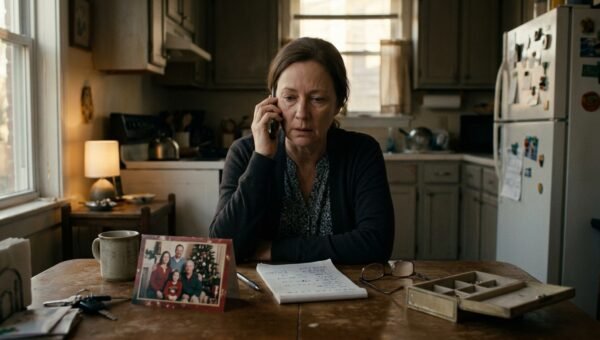

Jo’s last words to me that Thursday were, “See you at nine.” She was talking about the client meeting, not anything important. I remember because she was holding a yogurt cup and trying to get the foil lid off with one fingernail. By 11:30 that night, my boss had sent me an email asking me to prepare for that same meeting. At 8:47 the next morning, he was yelling at me in the office kitchen because I hadn’t answered it.
This happened more than a year ago. I’m writing it down now because I still think about how sure I was that I could keep everybody happy by being a little more available. I’d answer a message on the bus, or read email while waiting in the grocery line. Nobody had told me it was required. I thought I was being helpful. That was my mistake, though not the one my boss wanted me to think it was.
I was a project coordinator at a mid-sized company near Mobile. My boss, Gordon, managed our client accounts and reported to a vice president who had a way of asking for updates every hour when a deadline got close. Gordon was not always a bad boss. He could be funny over lunch, and he’d stayed late once when my mother was in the hospital so I could get a call from the doctor.
That’s part of why it took me a while to see the pattern.
The pattern was that when Gordon got nervous, other people had to feel it too. He’d send a message at night, then act the next morning as if the whole office had been waiting on him. I’d seen it happen to other people. I’d also answered those messages myself. A couple of times, I’d even been pleased when he thanked me for being “on top of things.” It felt good to be trusted. I didn’t stop to ask what I was teaching him to expect.
The client pitch had been on the calendar for weeks. I’d put the meeting time in my planner and helped pull the slides together, but Gordon was responsible for the final talking points and the pricing page. On Thursday afternoon, he said the vice president wanted one more round of changes. He looked tired, rubbing the spot between his eyebrows while he talked.
I told him I’d be in at my usual time, 8:45, and he said that was fine.
I left at 5:12. I know the time because I remember seeing it on the microwave in the break room while I put my lunch container in my bag. I had a long drive home, and I didn’t check my work email once I got there. I ate with my sister, watched half an old game show, and went to bed. My phone was on the dresser, face down.
At 11:30 PM, Gordon sent an email asking me to prepare some notes and a clean version of the client figures for the 9:00 meeting. I found out later that he’d also sent a message to the vice president saying the material would be ready. I was asleep. I didn’t know about either message.
I got to work at 8:45 the next morning, just as I usually did.
I set my bag down in the kitchen and started making coffee before logging in. The machine made a little popping sound when it finished, and the handle on the sugar jar was sticky. That’s the kind of useless detail I remember. I hadn’t even opened my inbox.
At 8:47, Gordon came through the doorway fast enough that Jo stepped aside to let him pass. He started yelling before I understood he was talking to me.
“WHERE HAVE YOU BEEN WHY HAVEN’T YOU ANSWERED MY EMAIL ARE YOU READY FOR THIS MEETING?”
Jo stopped with her spoon halfway to her mouth. Omar, who sat near the kitchen window, looked from Gordon to me as if he thought he’d missed something. I still had one hand on my coffee cup. I’d been in the building for two minutes.
“I just got here,” I said. “I haven’t logged in yet.”
Gordon said he’d emailed me the night before and the meeting was in less than fifteen minutes. I told him I hadn’t seen the email. He asked why I hadn’t checked it on my way in. That was when he said he expected me to look at my messages during my commute so I’d know what needed doing before I arrived.
I remember the way he said it like it was a rule everybody already knew. Not a suggestion. Not a favor. A requirement he was annoyed I’d failed to meet. I glanced at the clock over the fridge. It said 8:48. My coffee was still too hot to drink.
“I’m not checking work email while I’m driving,” I said. “I’m here at 8:45, and I’ll check it now.”
He said I should have been ready before I walked in. I could feel my face getting warm, and I wanted to snap back that he could have sent the email during business hours. I didn’t. I’ve got a sharp mouth when I’m cornered, and I knew if I raised my voice too, he’d make the whole thing about my attitude.
So I put the lid on my coffee and asked him to forward the message again. There was a short pause. Jo set down her spoon. Gordon said he’d already sent it, then turned and walked out. Nobody in the kitchen moved for a few seconds.
Omar finally said, “You literally just came in.” Jo didn’t say anything at first. She wiped the spoon with a napkin and said, “That wasn’t okay.” I said I had a meeting to get to. It was easier than answering the look on her face.
I opened the email at my desk. Gordon had sent it at 11:30 PM. The request itself wasn’t impossible. He wanted me to check the figures, make a one-page summary, and get it to him before the meeting. What bothered me was that he’d written as if I’d had the whole night to do it. I had not. I hadn’t known it existed.
I checked the numbers, made the summary, and got it to him at 8:58. It was not my best work, but it was accurate. We walked into the conference room at nine with the client already waiting on the screen. Gordon spoke through the first few slides. When the client asked about one of the figures, he paused and looked toward me.
I answered. The meeting went on. Nobody mentioned the kitchen, and I didn’t bring it up there. I was trying to keep the client out of the mess, even though I was still angry enough that I kept pressing my thumbnail into the side of my finger under the table.
Gordon was brisk with me afterward. He said the meeting had gone fine, then told me he needed me to be more responsive. I asked if he meant during work hours. He looked at the folder in his hand and said he meant when something important came up. That could mean anything. He knew it, and I knew it.
I went to the restroom, sat in a stall, and typed out what had happened in the notes app on my phone. I wrote down the time he’d emailed me, the time I’d arrived, what he’d said about the commute, and who’d been there. It felt a little dramatic. I almost deleted it. I didn’t.
Three weeks later, Jo asked me if I was doing all right. We were walking back from lunch, and she said she’d been thinking about the kitchen. Omar had asked her whether Gordon often spoke to me that way. She told him she hadn’t seen him do it before, but she’d seen him take his stress out on people.
I told her I’d written the incident down. She said that was smart. Then she said she was sorry she hadn’t said more in the moment. I told her I understood. I did understand. A lot of people go quiet when someone with a title starts shouting. I’d gone quiet too, just in a more polite way.
A couple of days later, I asked for a short meeting with HR and my department manager. I didn’t walk in demanding that Gordon be punished. I wanted a clear answer about what was expected of me outside my work hours. I brought the note from my phone and the email timestamp. My hands were damp on the folder, which annoyed me because I was the one who’d asked for the meeting.
The HR person asked me to explain. I gave the times first. 11:30 PM. 8:45 AM. 8:47 AM. Then I described the kitchen and repeated what Gordon had said about checking messages on my commute. I didn’t say he was a monster or that he was trying to ruin my life. I said I wanted the expectation written down so it couldn’t change depending on how worried he was that day.
My manager asked Gordon what the policy was. Gordon said there wasn’t a formal policy, but he expected people to use good judgment when a client deadline was close. HR asked whether I was expected to check email while driving. Gordon said, “No, not while driving.” Then he added that I could check before I left home or when I was riding in.
I said I wasn’t going to check work messages before my paid hours began. I said I’d respond during my scheduled day, and if there was an emergency, somebody could call me and we could talk about whether it was actually urgent. I didn’t raise my voice. I had written the sentence down first because I knew I’d be tempted to soften it.
Nobody argued with that. HR said messages sent outside work hours would not mean an answer was due before I arrived. My manager said urgent work needed to be planned and assigned during the day whenever possible. Gordon sat there with his hands folded and said he understood. He didn’t apologize in that meeting, but he also didn’t have an answer for why his 11:30 email made me late when I’d arrived at my usual time.
That was the part I’d needed to hear, even though nobody said it quite that plainly. His panic had made the email urgent to him. It didn’t turn it into my responsibility to read it in bed, at a traffic light, or before I’d started work. He’d had pressure from above him. I could understand that without taking it home for him.
Things were tense for a while. Gordon stopped asking me if I’d seen his emails at night, and I stopped trying to guess what mood he’d be in when I walked in. We kept our conversations about work. I sent updates before I left and made sure deadlines were clear. I didn’t volunteer to be available all the time just to seem like a good employee.
I still sometimes worry that people think I’m difficult when I say no. I used to check my inbox on the bus because it made me feel useful, and because I liked being the person who could fix things before anyone else noticed. It took one kitchen outburst to show me the cost of that habit. Not just the lost evenings. The way I’d started treating somebody else’s poor planning as proof I wasn’t doing enough.
More than a year later, I still work there. Gordon and I are polite. He sends late emails sometimes, but I read them when I’m back on the clock. Nobody has fired me. The client did not disappear. The sky did not fall because I waited until morning.
I make coffee at home now before I leave. I drink it at the kitchen counter, where nobody is asking me to prove I saw an email sent while I was asleep. My phone stays face down until 8:45.