At 8:46 p.m., my mother called me a toilet scrubber in front of 200 people. I remember the time because I checked my watch right after, like the numbers could tell me how long I was supposed to stand there.
I’m June Avery. I’m an Army captain, and I wore my dress blues to my mother’s veterans’ banquet in northern Michigan. I knew Diane could be cruel. I didn’t know she’d make a public show of it.
I’d agreed to attend because she’d asked me herself. She said the guests would be impressed to see a military officer in the family. I took that as a small, decent thing she was trying to do. That was my first mistake.
The banquet was one of Diane’s yearly events, the kind with a scholarship fund, a printed program, and people who knew which families had lake houses. She chaired the committee. Victoria, my older sister, sat at her right hand, smiling for photos. I sat near the end of the table, where my mother had put my place card.
I’m not saying I expected a hug. I expected her to introduce me by my name and let me eat dinner. That’s not a high bar, but I’d spent a long time thinking it was.
I’d also spent a long time explaining away small things. When Diane called my job “supply work,” I told myself she didn’t understand the Army.
When Victoria repeated that I mostly filed forms, I let it go because correcting her would start another fight. I had a whole list of reasons for not correcting people.
The badge on my chest was one more thing I’d learned not to talk about. It wasn’t a regular rank pin. It marked a special qualification and access level in a joint defense unit. Most people wouldn’t know what it meant, and I wasn’t allowed to explain the work behind it.
My mother had looked at it when I arrived. She touched the edge of my jacket and said I’d pinned it crooked. Then she turned to a guest before I could answer. At the time, I thought she just wanted the photo to look right.
That was another clue.
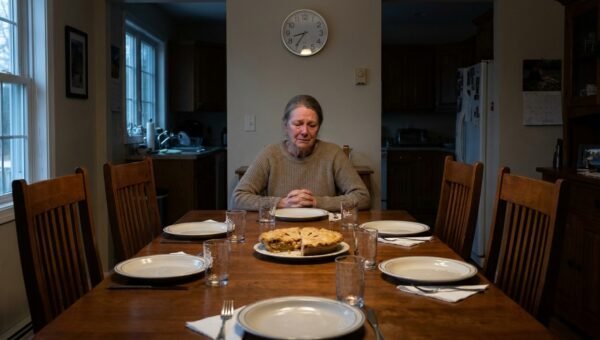
When I was ten, I scratched the side of Diane’s dining table with a toy. It was a thin mark, barely longer than my finger.
She stood me facing the wall for four hours. I know it was four because the kitchen clock ticked loud enough for me to count, and because I had to ask twice to use the bathroom.
I didn’t tell anyone. I didn’t want to make my mother sound bad. That kind of loyalty can get planted early, like a fence post. You keep leaning on it even when it’s rotten.
So when Diane started speaking at the banquet, I stayed at my table. She thanked the sponsors, the veterans, and the committee members. Then she introduced Victoria as the daughter who had always made her proud. Victoria looked down and smiled like she’d heard it a hundred times.
My mother picked up her glass. She was looking right at me when she said, “This is the son I always wished I’d given birth to, an elite warrior, not a toilet scrubber clinging to the military’s skirts.”
She pointed at me in my dress blues. A few people gave nervous little laughs, the kind people make when they’re waiting to see what the host expects them to do.
I didn’t laugh. I didn’t correct her, either. I could feel the badge pin pressing into my shirt as I stood up. The butter on my roll was still cold in the middle. I remember that, for whatever reason.
Diane’s smile stayed in place for about two seconds. She expected me to lower my eyes. I’d done that since I was a kid, and she had no reason to think I’d stop now.
Then Cole Mercer, a retired SEAL seated beside her, stopped smiling. He’d been part of the evening’s program and had spoken earlier about his service. He looked at my chest, not my face.
He leaned closer. “Are you 007?”
The room went quiet in a way I could feel more than hear. My mother’s hand stayed up, still pointing. Victoria closed her fingers around her water glass and didn’t drink.
Cole knew the badge. Not the public version of it, either. He knew the marking beside the clasp, the one that wasn’t meant to catch anyone’s eye unless they knew to look.
I could’ve pretended I hadn’t heard. It would have been easy, and for a second I wanted to. The work was classified. I wasn’t going to lay out my missions or people’s names in a banquet hall just because my mother had put on a show.
So I kept it simple. “Yes,” I said. “That’s my designation.”
Cole gave a small nod. “I thought so.”
Diane dropped her hand. She looked at him first, as if he’d made a mistake she could correct. Then she looked at me. “What is he talking about?”
I didn’t answer right away. My mouth had gone dry, and I was suddenly ten years old again, counting clock ticks and waiting for the wall to let me go.
Cole spoke before I did. He said the insignia belonged to an elite joint cyber-tactical and reconnaissance unit. He knew it from his own time working alongside special operations command. He didn’t give the room details I couldn’t share. He didn’t need to.
A man two seats down lowered his program. One of the committee women stopped smiling at Diane. The room had changed, but nobody made a speech about it.
My mother tried to take the room back. She said there’d been a misunderstanding and that I handled logistics. That was the word she’d used for years because it made my work sound small enough to fit her story.
Cole turned toward her. “You’re misrepresenting her service.”
That was the one line that stuck. Not because he raised his voice. He didn’t. He sounded like he was correcting a bad date on a form.
Diane looked at me again. “You could have told me.”
I wanted to say I had tried. I wanted to list the times I’d called from training, the times I’d said I couldn’t discuss certain work, the times she’d changed the subject back to Victoria. But I hadn’t told her everything. I couldn’t. And some part of me had still wanted her to be proud without needing to know the secret parts.
“I told you what I was allowed to tell you,” I said.
Victoria finally looked up. “You’re really in that unit?”
“Yes.”
She looked at the badge, then at our mother. She didn’t say anything else. The people nearest her were watching, and for once she didn’t have a ready little joke to soften things.
Diane’s face tightened. “This is not the place for this.”
“You chose the place,” I said.
That came out quieter than I expected. I didn’t feel brave. I felt tired, in the plain way you feel after carrying something too long and finally setting it down.
My mother started to say something about family. I don’t remember the whole sentence. I remember her hand reaching for my sleeve and my stepping back before she touched it.
“Don’t,” I said.
Cole moved half a step aside, giving me room to leave. He didn’t offer to escort me or turn it into a bigger scene. I appreciated that. He understood that I could walk out on my own.
I didn’t explain what 007 meant beyond the designation. I didn’t name the unit’s people or its work. I told the room I was a captain, that my service was real, and that I wasn’t going to discuss classified duties at a banquet.
Then I took my program off the table and left it there.
Behind me, I heard Diane say my name. I kept walking. A chair scraped. Someone else said, “Diane, let her go.” I didn’t turn around to see who.
Outside, the cold air hit my face. I stood on the steps for a minute and checked my phone. I had three missed calls already, all from my mother. My hands were steady enough to unlock the screen, so I silenced it.
The next morning, Victoria sent a text asking if I was okay. I said I was safe, but I wasn’t going to talk about the banquet. She replied that Diane had been embarrassed and hadn’t meant to make things so public.
I didn’t answer that. She knew what our mother had said. She’d been sitting right beside her.
By Monday, two members of the banquet committee had reached out to me. One apologized for laughing. The other said Diane had told people I was a logistics clerk and hadn’t known about my actual assignment. I thanked them, then stopped replying. I didn’t need to manage my mother’s reputation for her.
Diane sent a message saying I’d humiliated her in front of her friends. I read it twice. There was no apology in it. Just a complaint that I hadn’t protected her from the truth.
I blocked her number. I blocked Victoria’s too, after one more message asking me to “give Mom a little grace.” I didn’t announce it. I didn’t post anything about the banquet. I just stopped making myself available to people who used my silence as permission.
I still can’t tell my family everything I did in that unit. I don’t need them to know the details to know the work mattered. I know what I was trained to do. I know the people who trusted me with it. And I know I didn’t earn that badge so my mother could use my uniform as decoration.
The last image I carry from that night isn’t Diane’s face or the room full of guests. It’s the polished brass buttons on my dress blues catching the streetlights as I walked away, with nobody holding my sleeve.