I spent years being the boring granddaughter, and I didn’t know Grandma had been keeping track of what I heard.
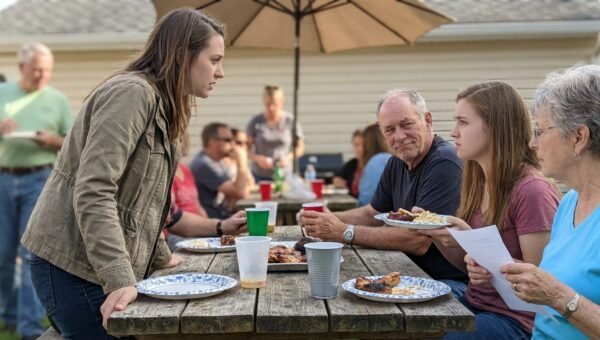
At her 90th birthday, Eleanor put a sealed envelope in front of each grandchild. She made us promise not to open them until she died. Mine felt nearly empty when I lifted it. I remember turning it over twice while my cousin Vicki asked if Grandma had put cash in hers.
“She said wait,” I told her.
Vicki smiled. “You always were good at following directions.”
My grandmother heard her. She was cutting the cake, and she gave Vicki that look she used when she’d caught somebody being rude but hadn’t decided whether to let them get away with it. Then she set the knife down and asked me to help carry the plates. That was Grandma. She didn’t make a scene. She gave you a job.
I visited Eleanor every Sunday for years. I brought groceries, though she usually had everything she needed, and sat at her kitchen table while she told me about the old days. I asked about the people in her photographs. I asked why she kept a cracked blue cup on the shelf. My cousins came too, especially on holidays, but they tended to ask about the house, the business, or whether Grandma had ever had the old brooch appraised.
I’m not saying I was some perfect granddaughter. I complained about traffic. I checked my phone. Once, I left early because I had promised to help at church and didn’t want to be late. But I came back the next week. Usually with the same bag of oranges she never finished.
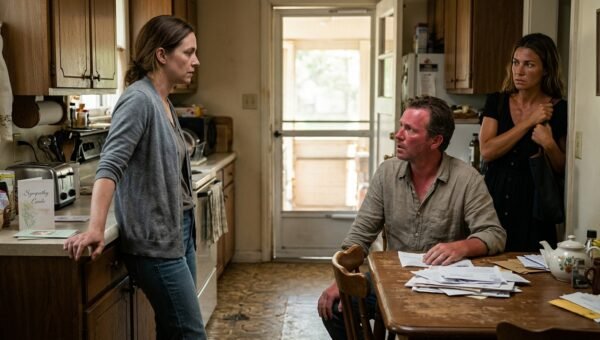
Eleanor died six months after her birthday. It was quick, and I’m thankful she didn’t spend a long time in pain. At the family gathering afterward, we finally opened the envelopes. I had expected something small. A recipe, maybe. Instead, Vicki had a check, her brother Dean had a jewelry appraisal, and my cousin Paul had papers for a small investment account.
They compared amounts at the dining room table like they were checking scores. I sat at the end with my envelope open.
Inside was a thin folded card. One sentence, in Grandma’s careful writing.
“Go to the library and ask for locker 19.”
Vicki leaned over my shoulder. “That’s it?”
I folded the card back up. My face was hot, and I wished I’d waited until I was alone.
I knew how silly that sounds. It was one sentence, not a personal insult. Still, after all those Sundays, I wanted to think she’d left me something that looked like it mattered.
Dean laughed. “Maybe it’s a coupon.”
“She must’ve saved the good stuff for you,” Vicki said. “You were always her favorite.”
I said, “She didn’t have favorites.”
I meant it, mostly. But I also wanted them to stop looking at my card.
I carried it home in my coat pocket. I nearly threw it out with the funeral program. I’m not proud of that. It felt like a joke that would make me look foolish twice, first at the table and then at the library. But the next morning, I put on my coat and walked into the town library anyway.
I didn’t know what I’d say if the librarian asked why I was there. The card was soft from being folded and unfolded.
I kept touching the pocket to make sure it was still there.
At the front desk, I told the woman I was looking for locker 19. She looked at my face, then at a small photo beside her computer.
“Are you Ruth?” she asked.
My feet stopped moving. “Yes.”
“I’m Clara. Eleanor asked me to look out for you.”
The words were so plain I almost missed what they meant. Clara came around the desk and picked up a key from a drawer. It had a paper tag tied to it with a piece of string.
“How did she know I’d come?” I asked.
“She didn’t know for sure,” Clara said. “She just hoped you would.”
That was enough to make me want to turn around. Not because I didn’t trust Clara. Because suddenly this felt real, and I wasn’t sure I wanted to be responsible for whatever Grandma had put away.
Clara saw me hesitate. “She said you might need a minute.”
“She said that?”
“She knew you.”
I followed Clara downstairs. The library basement smelled like paper and the lemon cleaner the staff used on the counters. A little farther along, the smell changed to damp concrete. Clara stopped at a row of metal lockers and tried the key in number 19.
The lock stuck. She leaned into it, and I heard a short scrape before it turned.
Inside were seventeen notebooks tied in bundles with string.
I took one out. It was heavier than I expected, with Grandma’s handwriting on a label taped to the front. The paper had gone a little soft at the corners. Clara stood beside me, giving me room.
I untied the first one.
The first page said, “For the granddaughter who actually listened, here is what our family never told you.”
I read it once. Then I read it again, slower. My eyes went back to “actually listened,” and I had to sit down on the concrete floor with the notebook in my lap.
Clara found me a chair. “You can stay as long as you need.”
“I thought she’d left me nothing.”
Clara didn’t rush to answer. Then she said, “She told me you might say that.”
The notebooks were Grandma’s memoir, but they were also a record of how our family had made its living. Not a polished family tree with names and dates. They held receipts, copies of old notices, bits of letters, and Grandma’s own notes about what people did when the money ran short.
She had come to this country as a young woman with an education she couldn’t use right away. She learned English by reading newspapers and library books. She worked long days, then wrote at night. She never talked about herself like she was brave. She wrote down what happened, and what people said.
The family business had started small and grown over time. My cousins talked about it as if success had come from one clever investment and a few good years. Grandma’s notebooks showed the less tidy version. During the worst stretch, my grandfather worked extra shifts repairing gear for local fishing boats. Grandma took in mending and kept the books. Her brother lent them money he couldn’t spare. My mother’s parents let them stay in a back room for eleven weeks while they got back on their feet.
There were dates and names. There were copies of the old bills. There was a note beside one entry that said, “We paid the grocer on Friday. I told Ruth’s grandfather we would eat beans until payday.”
I stopped there. My grandmother had never told me that part when I was a child. Actually, she had started to tell me once, but I’d asked about the picture on the wall instead. She didn’t seem bothered. She answered my question, and now, years later, I was glad I’d asked it.
I went back to the library the next weekend. Then the weekend after that. I told my church friends I was sorting through Grandma’s papers, which was true, but it didn’t cover the whole thing. I was trying to hear her voice in the writing without making it say what I wanted.
The notebooks held the family’s sacrifices, but they also held the ordinary things. Grandma wrote down the names of neighbors who brought soup. She remembered a cousin selling his watch to cover a bill, then buying it back years later. She wrote about my mother as a girl, always leaving the last biscuit for her younger brother.
There were pages about me, too.
I found one dated after a Sunday visit when I’d asked why Grandma kept the cracked blue cup. She’d told me it belonged to her sister and had survived a move, a chipped handle, and a kitchen fire. In the notebook, she wrote, “Ruth asked about the cup today. She wanted to know why I kept it, not whether it was worth anything.”
I sat with that sentence a long time. I’d forgotten asking. I remembered the cup, though. I remembered its chipped edge catching on the dish towel.
A few pages later, Grandma wrote about a conversation we’d had over a box of family photographs. I had asked why one woman was missing from the group picture. Grandma said the woman had left the family after a fight and had been spoken of as if she’d never belonged. I remember being angry about that. I said, “But she’s still in the picture.”
Grandma wrote that down, too.
I used to think listening was just what you did when you didn’t have much to say. My cousins could tell a room full of people what they’d been given. I didn’t know how to talk about my Sundays with Grandma without sounding like I was asking for credit.
So I kept reading.
By the time I reached the last few notebooks, the estate plans had started. One afternoon, my cousins called to say they were going to the old house to sort things for an auction. The house had been in the family for years, and the idea was to clear it out before making a decision about selling it. I was invited, but the tone made it clear they expected a quick look around and not much discussion.
I brought photocopies of a few pages and the records Grandma had kept. I didn’t bring all seventeen notebooks. They were still at the library, where they belonged until I worked out what to do with them.
At the house, Dean had a box open on the floor. Vicki was making two piles, one marked “keep” and one marked “sell.” The cracked blue cup sat in the keep pile, beside a set of old photographs.
“Those can go together,” I said.
Vicki lifted the cup. “This thing?”
I set the photocopies on the table. “Grandma wrote down where it came from. And who gave it to her.”
Dean looked at the papers. “You read all those notebooks?”
“Most of them.”
“Why didn’t she tell us about this stuff?”
I wanted to say because you never asked. It was true, but it wouldn’t have helped. I’d spent enough time feeling small around them. I didn’t want to use Grandma’s words as a weapon.
“She wrote it down because she wanted it kept,” I said. “There are records for the business, too. Not just stories.”
Dean turned one page over. “This says Grandpa borrowed money from your great-uncle.”
“And Grandma took in mending until the bills were caught up.”
Vicki stopped sorting. “We were told the business was doing fine by then.”
“It wasn’t.”
I kept my voice low. I didn’t have to raise it to make the point. Grandma had given me dates and names, not a reason to punish anybody.
The family agreed to pause the auction. We took time to look through the photographs and papers, and I made a list of the items the notebooks described. A few of the cousins still wanted the money from selling the house. I understood that. I wasn’t in a position to promise that everyone would keep it forever, and I didn’t pretend the notebooks were legal instructions.
But the old records changed the talk. We agreed not to throw anything out or sell the family papers. We would make copies for everyone and ask the local historical group how to preserve the business records. Vicki didn’t apologize for calling me boring. She did stop calling me that.
Dean said, “I didn’t know she’d written all this.”
“No,” I said. “I don’t think you did.”
It wasn’t a grand repair between us. We still had old habits. But nobody laughed at the card again, and the photographs went back into a box instead of an auction pile.
I now go through the notebooks at the library, one at a time. Clara keeps them in the same basement locker, and I’ve started making a careful index so my cousins can find names and dates without having to read every page. I’m not sure what the family will do with the house in the long run. We’ll have to decide that together.
I used to think Grandma chose me because I had done something special. Maybe she did, in a small way. But the notebooks make it plain that she wasn’t handing out a prize. She trusted me with the part of the family nobody had bothered to hold on to.
I reached the seventeenth notebook on a quiet Saturday. I sat at the heavy oak library table under the reading lamp and rested my hands on the string. The last pages were for all of us, not just me. I could tell from the names on the first sheet.
I untied the string slowly.