The brass key felt colder than the rest of the things in Greg’s gym bag. I remember that because I had my hand down in the bottom seam, trying to find the locker key he swore he’d lost. The new key was tucked in there by itself. I tried it in the front door, the back door, even the little side door by the garage. It didn’t fit any of them.
I was sure it was something harmless. Greg had been careless with keys forever. I figured he’d brought home one of the gym’s spares, or picked it up by mistake. I put it on the counter and went back to making coffee. That was the choice I made first: I decided there was no point asking him about it until I knew what it was. After 24 years, I thought I knew the difference between a real problem and Greg being disorganized.
The locksmith charged me $15 to look at it. He turned the key over in his fingers, then rubbed the edge with his thumb. “This is for a Kwikset deadbolt. Residential.” I asked if he could tell me what house. He couldn’t. He said it was a common kind, but it was new and hadn’t been cut down much. I thanked him and put it in my coat pocket.
Wednesday night, Greg asked why I was quiet. I said I had a headache. He was already in the habit of getting up early for the gym, so nothing about Saturday seemed strange. He’d set out his workout clothes the night before. I told myself I was being sensible by waiting to see where the key led. It felt like caution then. It was really me trying to keep the truth from getting into the house.
At 6:00 Saturday morning, Greg backed his silver sedan out of the driveway. I waited a minute before following. The roads were mostly empty, and I kept enough distance that I could still see him at the lights. He drove 14 miles, not toward the gym, but to a duplex on Crane Avenue, near the industrial strip.
He parked and took the new key from his pocket. A woman opened the door in a bathrobe.
Greg went inside without knocking. I stayed in my car. I could have walked up. I could have made him look me in the face and explain himself. Instead, I kept both hands on the steering wheel and started taking pictures.
I took 11. Greg at the door. The woman in the doorway. His car out front. I watched the house for 40 minutes. A neighbor’s dog barked twice, and the heater in my car kept making a little click that I can still hear when I think about that morning. I didn’t know the woman’s name yet. I knew she wasn’t me.
I drove home before Greg did. I didn’t cry. I didn’t throw anything. I made toast and couldn’t eat it. When he came in later, he said the gym had been crowded. I said, “Was it?” He looked at me for half a second, then asked if I wanted him to pick up groceries. I said no.
Monday morning, I took the photos to Evelyn Vance, the attorney a friend had recommended. I thought I was going to ask about divorce and maybe the house. I wanted to know if Greg could make me leave. Evelyn didn’t start with the pictures. She asked how long we’d owned the house and whether there was still a mortgage.
“Paid off in 2018,” I said.
She wrote that down. Then she asked if I’d ever taken out a home equity line of credit. I said no. Greg had handled the online banking for years, mostly because he liked dealing with numbers and I hated passwords. I thought we had agreed not to borrow against the house once we paid it off. I had said that out loud many times. I believed the agreement was still there because I believed the house was still safe.
Evelyn pulled the county property records. The duplex on Crane Avenue had been purchased in 2023 for $167,000, cash, under Greg’s name alone. I looked at the printout and thought there had to be another Greg. Then Evelyn found the lien against our house. A $180,000 home equity line opened in late 2023.
“Where did the money come from?” I asked.
“From your home,” she said.
I kept looking at the purchase price. $167,000. The rest had gone to fees, repairs, or whatever else Greg had decided I didn’t need to know about. Evelyn said the deed showed he owned the duplex by himself. The loan was secured by the house we’d paid off together. Those facts sat there on her desk, plain as grocery totals.
I said Greg must have planned to tell me. Even while I said it, I knew how weak it sounded. Evelyn didn’t argue. She asked whether I wanted her to contact the lender’s fraud department and request the original application and closing records. I said yes. I also told her I didn’t want anyone calling Greg yet.
“Once we ask for those records, he may find out,” she said.
“I understand.”
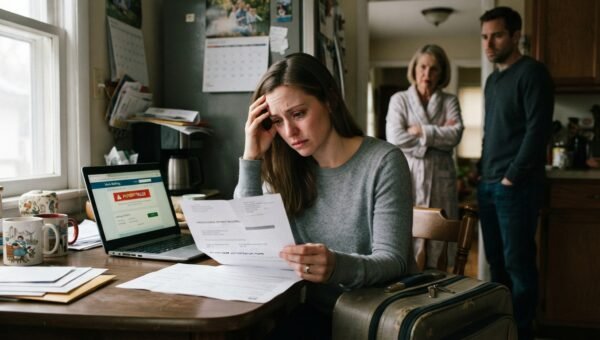
I did, mostly. What I didn’t understand was how much I’d helped him by not looking. He had moved the HELOC statements to a digital portal I never checked. The account was paperless, and I’d let that seem like a small convenience. For months, maybe longer, I had treated not knowing as proof that nothing was wrong.
Tuesday through Thursday were all forms, calls, and waiting. The lender’s fraud division confirmed the loan documents were in its files. Evelyn and I went through the application page by page. My name was there. The signature looked enough like mine from a distance that I understood why Greg thought he could get away with it. The capital letters leaned the wrong way. The last stroke of my name curled up, though I always bring it down.
There was a notary stamp I didn’t recognize. The lender’s investigator said the notary had been associated with someone Greg knew and that the stamp appeared to be falsified. He spoke carefully. He wasn’t there to decide guilt. He was there to preserve the record and investigate how the loan had been approved.
Evelyn explained that bank fraud and identity forgery could carry penalties of up to 30 years under the applicable federal and state laws. She also explained what she could and couldn’t promise. She couldn’t offer Greg immunity. Neither could I. But I could put the evidence in front of the bank and the district attorney, or I could give him one chance to sign a settlement that protected my ownership of the house, made him responsible for the debt, and required the duplex to be sold.
“Don’t frame it as a way to make the charges disappear,” she told me. “You can’t control what they do.”
That mattered. I didn’t want to pretend a signature on a divorce agreement erased the forgery. I wanted my home protected, my credit protected, and the duplex sold so the stolen equity could be repaid. I also wanted Greg to understand I wasn’t going to quietly absorb the debt because he was sorry now.
By Friday, I had the records in a binder. I froze the joint liquid accounts within the legal limits Evelyn gave me, so Greg couldn’t drain them while we were sorting this out. I set the binder on the kitchen table and placed the brass key beside it. I’d kept the key in my coat pocket all week. I didn’t know why I hadn’t put it away.
Greg came home at 6:18. He took off his jacket and saw the table. He stopped before he reached the chair.
“What’s this?” he said.
I didn’t answer right away. I slid the 11 photos across the table. He looked at the first one, then the next. His mouth opened, but nothing came out. I put the brass key on top of the pictures.
“Crane Avenue,” I said.
He sat down. “It’s not what you think.”
I’d expected anger from myself. Maybe shouting. Instead I opened the binder to the deed and the loan papers. My hands were steady enough to turn the pages. “You bought that duplex in 2023,” I said. “You used a home equity line against our house.”
Greg rubbed his forehead. “It was an investment.”
“With my forged signature?”
“I was going to tell you.”
“When?”
He stared at the papers. “I thought I could make it work first.”
That was Greg’s way of saying he’d wanted the benefit without having to ask me. He’d always been good at talking about our money as if it were a pile he had the right to move around. I’d let him do it before, because he sounded sure and because I wanted to believe being married meant the decisions were ours, even when I wasn’t in the room.
“I didn’t know Trina had moved in,” I said. “I didn’t know the house was collateral. I didn’t know you’d signed my name.”
He looked up at that. “Don’t bring her into this.”
“She’s already in it. The house is in it too.”
His voice got softer. “I messed up. I can fix it.”
“No,” I said. “You can sign the agreement.”
I told him Evelyn had the lender’s records. I told him the signature was being reviewed as a forgery and the notary stamp as false. I told him the bank could refer the matter for criminal investigation. I didn’t read every penalty out loud. I didn’t need to. I put Evelyn’s letter in front of him and let him read the words “federal bank fraud” for himself.
He said, “You’re trying to send me to prison.”
“I’m giving you the terms.”
“After 24 years?”
“After you used our paid-off house to buy your own place.”
He put a hand over his face. For a second, I remembered him sitting beside me at the kitchen table years earlier, sorting bills into neat piles because I was overwhelmed after my mother’s surgery. I remembered trusting him with the passwords because he said it was easier. That memory didn’t make the papers disappear. It only made me understand how ordinary the first step had looked.
Greg asked if we could go to counseling. He said the relationship with Trina had been going on a long time, then tried to make it sound like a separate mistake. He said the duplex was supposed to create income for us. He said the rent from the other unit had been helping cover things. I asked why the deed was in his name alone.
He didn’t answer.
The agreement gave me full ownership of the marital home and protected my credit by making him fully responsible for clearing the HELOC and any tax penalties tied to his actions. It required the Crane Avenue duplex to be sold under court supervision, with the proceeds going toward the principal and interest on the fraudulent line. It also set out the divorce terms without a fight over the house. Evelyn had made sure I understood that the bank and the authorities would make their own decisions.
Greg read every page. Then he read them again. He asked for a night to think. I said he could talk to his own attorney, but the accounts would stay frozen and Evelyn would send the evidence to the bank’s fraud unit as planned.
He signed before midnight. His hand shook on the last page. Mine didn’t.
He packed his clothes and left the house that night. I didn’t help him. I didn’t block the door either. The joint accounts stayed frozen while the legal work moved ahead, and I filed for divorce. The court entered the financial terms. The duplex was listed and sold under supervision. The proceeds paid the bank back for the $167,000 purchase and the added interest. Greg signed the papers taking responsibility for the debt, and Evelyn reported the notary to the state licensing board.
I didn’t get an apology that fixed anything. Greg said he was sorry more than once. He said it in emails, then through his lawyer, then once in a message he sent after the duplex sale. I read each one. I didn’t answer.
The new brass key had been new because Greg had changed the Crane Avenue deadbolt two days before I found it. Trina had lost her set. That was what he told Evelyn during the financial process. He’d made a new key for a door he’d bought with money taken from the house where I lived.
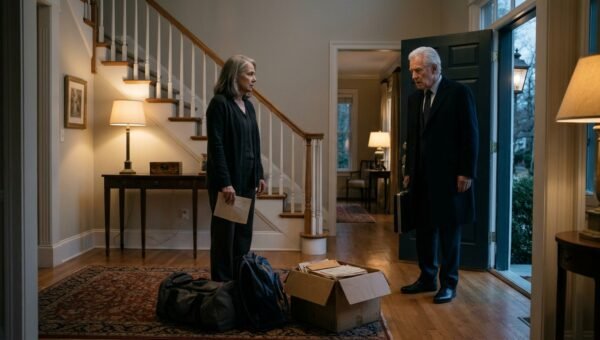
A locksmith came to my front porch after the divorce was final. I watched him replace the deadbolt cylinder. He put the new keys in my palm, cold and sharp at the edges. I went inside, closed the door, and slid the deadbolt home.
It made one solid click.