I was wrong about the man in the photograph, but I wasn’t wrong to ask questions.
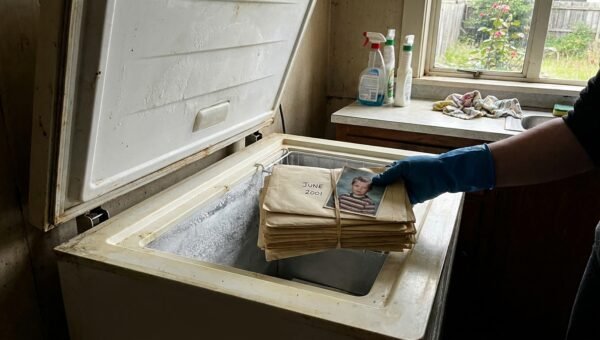
Lily had one finger on Julian’s face. The picture was an old college snapshot of me and the man I dated before I met Mark. I was sure I’d thrown it away years ago. Lily was five, sitting cross-legged on our living room floor, and she looked up at me like I was the one who’d forgotten something.
“I know him,” she said. “This is the guy who brought the big yellow trucks to my school.”
For a second, I couldn’t get my thoughts lined up. Julian was not supposed to be anywhere near my life now. I’d last seen him twelve years earlier, and I had no idea he’d moved to our town. But I kept my voice even for Lily.
“Where did you see him, honey?”
“At morning circle. He had a hard hat. And the yellow blueprints.” She turned the picture toward herself. “He brought the little diggers too.”
I wanted to believe her right away. I also wanted to know exactly what she meant. Those are not always the same thing, especially when you’re somebody’s mother.
The photo was tucked behind a cardboard divider in a memory box I hadn’t finished sorting. That box had been under the hall closet shelf for years. I’d pulled it down because Lily wanted to see pictures of me in college, and I thought it would be an easy rainy-day activity.
I’d forgotten how many things you can leave in a box without meaning to keep them.
I told Lily we’d look at it again later, then went back to the album. I didn’t want her to see how much her answer had startled me. I mean, a child can tell when your face changes, and then you’re managing her worry on top of your own.
Julian and I had dated during college. We were young, but not so young that I can claim I didn’t know what I was doing. We got along well. He was funny in a dry way, good at drawing buildings on napkins, and the person I called when my old car wouldn’t start. Then he got an out-of-state fellowship and made his choice quickly. I said I understood. I didn’t, not then. We stopped calling, and I was too proud to ask him to reconsider.
When I met Mark later, I didn’t need to talk myself into loving him. He showed up, he stayed, and he was the kind of man who put a clean spoon in the drawer instead of leaving it by the sink. I had a real life with him. Still, seeing Julian’s face in Lily’s hand felt like finding a loose board in a fence I thought was sound.
I took a breath and went back to her.
“You said he came to school. Was he with your teacher?”
“Yes. Mrs. Gable was there.” Lily was already moving on to the next picture. “He showed us how the big truck digs.”
“Did he say his name?”
She shrugged. “Julian, maybe. He gave us bridges.”
That was not enough to settle it. It was enough to keep me from turning a simple question into a frightening story in front of my child.
After Lily went to bed, I opened the preschool app. I checked the recent messages, then the weekly bulletin, then the photos Mrs. Gable had posted from the class visit. I found the recap three screens down: a supervised career-day session with Julian Vance, lead designer for the new community center preschool and library wing. The children had been shown model construction equipment and given small building kits.
There was a picture of Julian beside a row of preschoolers. He was wearing a hard hat, holding up a little yellow model excavator. Lily was in the photo, her hand raised.
I sat at the kitchen counter longer than I needed to. I’d found the answer to how she knew him. I hadn’t found the answer to why he was here or whether he’d recognized us.
Mark came in from the garage and saw the picture on my phone.
“What’s that?”
I told him. I tried to make it sound like a funny coincidence, but I kept going back to the fact that Julian had been in Lily’s classroom.
Mark took the phone and read the bulletin. “That looks like a school event.”
“It was. I know. I’m not saying he did anything.”
“But you’re worried he might have known she was yours.”
I nodded. “My name was on the parent volunteer sheet. He could’ve seen it.”
Mark handed back my phone. “Then ask the school. Get the facts before your brain plants a whole crop.”
That was the sort of thing Mark said when he was trying to help. I was grateful, even though I still felt the old worry pushing at me. I’d spent years treating that breakup like it was too small to matter. Seeing Julian’s name beside my daughter’s class made me wonder if I’d only buried it because I didn’t want to deal with it.
The next morning, I called Mrs. Gable. She sounded busy, but she didn’t rush me.
“Julian Vance was here three weeks ago,” she said. “It was scheduled through the school. The city asked him to talk about the community center project.”
“Was he alone with any children?”
“No. I was there, and two teachers stayed in the room. We checked his credentials through the city before the visit.”
I knew I was being careful. I also knew I was asking the question a parent should ask.
“Did he know who Lily was?”
There was a pause. “He saw your last name on the parent volunteer flyer. He told me he knew you from college. He didn’t ask to speak with Lily or come back to the classroom.”
That gave me a fact, not a full explanation. I asked Mrs. Gable to confirm the visit had been part of the public project, and she said she’d send me the city notice. It arrived before lunch.
Julian’s architecture firm had taken a regional civic contract six months earlier. He was the senior partner assigned to the community center expansion in our town. The notice listed the new preschool wing, library space, and playground work. There was nothing hidden about it. His name was right there, under the city seal.
I still wanted to hear it from him.
Maybe that sounds stubborn. It was. I’d rather have asked Mark to come with me, but I didn’t want to turn this into a bigger family event than it was. I told him where I was going. He said he’d keep his phone close, then asked me to text when I got there.
The construction site was a short walk from the center of town. I went to the work trailer and showed the person at the desk the city notice and my driver’s license. I asked who could confirm Julian’s role. The site administrator checked a sheet, then walked me over to the office.
Julian was looking at a plan spread across a table. He looked up, and I saw the recognition before he said my name.
“Claire.”
“Hi, Julian.”
He set down his pen. He didn’t come toward me. “I’m guessing this is about the school visit.”
“It is.”
He nodded once. “I’m sorry it worried you.”
I held up the bulletin. “I want to know why you’re here, and whether you recognized Lily before you went into her classroom.”
He glanced at the paper, then back at me. “I’m here for the city contract. I recognized your last name on the parent volunteer flyer after I arrived at the school.”
“Why didn’t you tell me?”
“I didn’t think I should contact you. You have a family. I didn’t want to show up in your life over a work project.”
I could hear the humility in his voice. I could also hear how easy it would’ve been for him to call that respect and leave me to guess. So I asked him plainly.
“Did you know Lily was my daughter before you met her?”
“I knew the last name might be yours. I didn’t know she’d be in that class until I got there. Mrs. Gable was with us the whole time.”
He looked uncomfortable. Not guilty in some grand way. Just like a man who knew his old choices had left a bad taste and wasn’t sure what he was allowed to say now.
“I should’ve told the school I knew you,” he said. “I didn’t want anyone to think I was trying to get near your family.”
“Were you?”
“No. I wasn’t.”
The plain answer helped. So did the paperwork I’d already seen, the school’s clear account, and the fact that he hadn’t tried to reach me. I still didn’t want his good intentions to become an excuse for loose boundaries.
“Lily’s school isn’t a way to see me,” I said. “If you’re at an event, it needs to be through the school and with the staff there. Don’t ask to speak with her separately. And don’t send anything home to her through the classroom.”
He listened without interrupting.
“That’s fair,” he said. “I’ll keep everything through the school.”
I wanted to be angry at him for making me feel afraid. But the more honest answer was that I’d been afraid before I even knew what had happened. I was looking at a picture from college, and my mind had filled the empty space between then and now with the worst version it could find.
Julian rubbed the edge of the plan with his thumb. “I’m sorry we ended things so badly.”
We had never had some huge fight. He left for the fellowship. I told him I wouldn’t ask him to stay. Then we said a few sharp things on the phone and stopped calling. I’d made a clean story out of it because a clean story was easier to carry.
“I was hurt,” I said. “I acted like I wasn’t.”
“I should’ve talked to you before I left.”
“Probably.”
It wasn’t a reunion. We weren’t going to fix twelve years of old choices in a work trailer. But for the first time, we had said the part we’d each kept to ourselves.
He asked how Mark was. I told him Mark was good, and that Lily had been thrilled by the little diggers. Julian smiled at that, then seemed to catch himself.
“I’m glad,” he said. “I’ll stay out of your family’s way.”
“Stay professional,” I said. “That’s all I’m asking.”
“I will.”
I left after that. Nobody followed me to the parking lot. Nobody called after me. The site went on being a work site, with plans and staff and a public contract. I sent Mark a text from the sidewalk. “I checked. It’s all aboveboard. We’re okay.”
He wrote back, “Glad you asked.”
That evening, I told him the whole conversation. He listened without trying to tell me what I should’ve felt. When I mentioned Julian’s apology about college, Mark just said, “That’s good. You can let it be done now.”
I thought that was right. I didn’t need to like how the old relationship ended. I didn’t need to pretend it never mattered, either. I just needed to know what was happening around Lily and make sure the boundary was clear.
A week later, Lily brought home the wooden bridge from her class kit. The teacher had sent the pieces home so the children could paint them with their families. Lily sat at the kitchen table with a jar of blue paint and a brush she held too tightly.
“Can we make the road yellow?” she asked.
“Sure.”
“Like the big truck?”
“Sure,” I said again.
I took the old photograph out of my purse. I’d kept it there after the site visit, though I can’t really say why. I held it for a moment, then dropped it into the recycling bin. It landed between a grocery flyer and the folded cardboard from Lily’s cereal box.
Then I sat beside her and held the bridge steady while she painted. She got blue on her thumb. I wiped it off with a paper towel, and she went right back to work.
Lily had painted one side yellow, and I held the bridge steady while she worked.