PART 1
The house on Elmwood had been in my name for three years, but the hallway still smelled like my mother’s lemon wax[cite: 1]. She was seventy-four, and every single step she took on the oak floors sounded slow and thin[cite: 1].
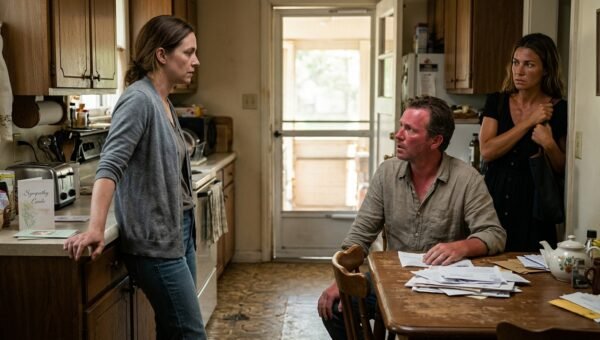
My husband, Mark, had laid out the credit card bills and the contractor’s estimate across our kitchen table two weeks earlier[cite: 1]. We had four kids squeezed into two tiny bedrooms[cite: 1].
Our oldest, Tyler, was fourteen, sleeping on a fold-out mattress in the basement playroom, and our twin girls were sharing a twin bunk bed meant for toddlers[cite: 1]. Life had simply gotten too expensive[cite: 1]. Between groceries, sports fees, and heating an old four-bedroom colonial, we were coming up twelve hundred dollars short every single month[cite: 1].
“It’s legally yours, David,” Mark had told me, tapping the county deed document on the laminate[cite: 1]. “Your dad signed it over before he passed so the state wouldn’t take it for medical bills[cite: 1]. Your mom lives alone in four bedrooms[cite: 1]. We are drowning here, and she needs supervision anyway[cite: 1].”
I convinced myself he was being practical[cite: 1]. I told myself I was being a good father by putting my four children first[cite: 1].
When I drove over to tell her, she was sitting by the kitchen window, drinking instant decaf[cite: 1].
I didn’t beat around the bush[cite: 1]. I told her the taxes had gone up, the maintenance was beyond us, and the kids needed the space[cite: 1]. I told her I had already found a small, affordable residential care facility fifteen miles south called Green Valley Rest[cite: 1]. It was the cheapest place within county lines that still took basic Medicaid vouchers and what little social security she drew[cite: 1].
I braced myself for an argument[cite: 1]. I expected her to bring up my father, or remind me that she had brought me home from the maternity ward to that exact living room forty-four years ago[cite: 1].
She didn’t raise her voice[cite: 1]. She didn’t cry[cite: 1].
She set her mug down on the saucer with a quiet click, looked out at the overgrown backyard, and gave me a faint smile[cite: 1].
“I only need one thing, David,” she said softly[cite: 1]. “My old flowerpot[cite: 1].”
She pointed toward the back porch[cite: 1]. Sitting on the bottom wooden step was an ugly, heavy terracotta planter, chipped along the rim and streaked with dark mineral scale[cite: 1].
The soil inside was packed hard and gray, holding nothing but a dead stalk of dried geranium from two summers ago[cite: 1].
“That’s all you want?” I asked, feeling a strange knot tighten in my throat[cite: 1]. “Mom, we can pack your dresser[cite: 1]. We can take your quilt[cite: 1].”
“No,” she said, smoothing her apron over her knees[cite: 1]. “The rooms in those places are very small[cite: 1]. Just the pot[cite: 1].”
Three days later, I backed my sedan into her driveway[cite: 1]. I loaded two cardboard boxes of her clothes and toiletries into the trunk, then picked up the terracotta pot[cite: 1]. It was remarkably heavy, weighing easily twenty or twenty-five pounds, full of dense dirt[cite: 1]. I set it carefully on the floor of the backseat[cite: 1].
During the twenty-minute drive down Route 9, neither of us said much[cite: 1]. Green Valley was an older brick facility set behind a strip mall[cite: 1].
The linoleum in the entryway was scuffed dull, and the air smelled heavily of industrial pine cleaner and canned soup[cite: 1]. A nurse with tired eyes checked her in, noting down her medications on a clipboard[cite: 1].
Before we walked into her shared room, my mother stopped in the corridor[cite: 1]. She took my hand in hers[cite: 1]. Her fingers felt papery and dry, but her grip was firm[cite: 1].
“Save your money for the children, David,” she said in a quiet, steady voice[cite: 1]. “Don’t waste it on an old woman like me[cite: 1].”
I nodded, feeling a wave of relief wash away my guilt[cite: 1]. I told myself she was at peace with the arrangement[cite: 1]. She understood economics[cite: 1]. She accepted it[cite: 1].
I carried the flowerpot into her room and set it by the small radiator under the window[cite: 1]. I kissed her cheek, promised to visit the following weekend, and walked out to my car[cite: 1].
PART 2
The next seven weeks became a blur of moving vans, drywall dust, and arguments about paint colors[cite: 1].
Mark and I packed up our cramped rental and moved the kids into Elmwood[cite: 1]. Tyler got the master bedroom upstairs[cite: 1]. The girls took my mother’s old sewing room[cite: 1]. With four active children running through the halls, the house felt loud and crowded, just as we had planned[cite: 1]. But every time I walked down the basement stairs or stood in the kitchen pantry, I saw small grease-pencil marks on the doorframes measuring my own height from 1988[cite: 1].
I visited Green Valley twice during the first month[cite: 1]. Each time, my mother was sitting in the vinyl armchair next to her bed, her hands resting quietly in her lap[cite: 1]. The terracotta pot sat on the floor right beside her slippers[cite: 1]. She never complained about the bland food or the roommate who kept the television on all night[cite: 1]. She only asked about Tyler’s algebra grades and whether the twins’ cough had cleared up[cite: 1].
“Are you watering that thing?” I asked during the second visit, pointing at the dead geranium stalk[cite: 1].
“It doesn’t need water,” she answered, looking at it with a gentle expression[cite: 1]. “It just needs to stay near me[cite: 1].”
On a rainy Tuesday morning, exactly fifty-three days after I had moved her in, my phone buzzed on the kitchen counter while I was packing lunches[cite: 1].
The caller ID showed Green Valley Rest[cite: 1].
The head nurse spoke without preamble, her tone practiced and gentle[cite: 1]. My mother had not woken up for breakfast[cite: 1]. The night aide had checked on her at five in the morning, and she had passed away peacefully in her sleep from congestive heart failure[cite: 1].
The funeral was small, held at the parish cemetery where my father was buried[cite: 1]. We could not afford a large reception, so we had coffee and store-bought sheet cake in the church basement with a handful of her old neighbors[cite: 1].
After the service, I drove back down to Green Valley to clear out her room[cite: 1].
The staff had already packed her things into a single copy-paper cardboard box taped at the seams[cite: 1]. Her worn slippers, her cardigan, a few bottles of lotion, and her prayer book fit easily inside[cite: 1].
“And this was next to her bed, Mr. Miller,” the administrator said, sliding the heavy, chipped flowerpot across the linoleum counter toward me[cite: 1].
I carried the box in one arm and the pot against my hip[cite: 1]. When I lifted the planter off the counter, a folded square of yellowed notebook paper fluttered down to the floor[cite: 1]. It had been tucked directly beneath the base of the pot, pressed flat between the clay and the plastic tray[cite: 1].
I crouched down and picked it up[cite: 1]. Written across the center in my mother’s shaky, cursive pencil was a single sentence:
“Before you throw this away… dig to the bottom.”[cite: 1]
PART 3
I sat in the front seat of my car with the engine idling, staring at the paper[cite: 1]. Rain drummed against the windshield[cite: 1].
The pot sat on the passenger floorboard[cite: 1]. For nearly forty-five years, that planter had sat on the back patio of Elmwood[cite: 1]. I remembered stubbing my toe on it when I was nine years old[cite: 1]. I had assumed she kept it out of stubborn habit, the way older folks keep broken lawn chairs or cracked mixing bowls[cite: 1].
I drove home in silence[cite: 1]. Mark was still at work, and the kids were at after-school practice[cite: 1]. The house was quiet[cite: 1].
I carried the heavy planter out to the back deck, retrieved a small steel garden trowel from the garage, and laid an old plastic tarp across the patio table[cite: 1].
I jammed the edge of the trowel into the dirt[cite: 1]. The top four inches were dry, compacted potting soil mixed with old roots[cite: 1]. I scooped it out in hard gray clumps, spilling it across the blue plastic[cite: 1].
Halfway down, the metal edge struck something solid with a dull thud[cite: 1]. It was not a stone[cite: 1].
I put the trowel down and used my bare fingers[cite: 1]. The soil beneath the crust was cold and dry[cite: 1]. I pulled away two more handfuls of dirt and felt heavy plastic[cite: 1].
Buried vertically in the center of the pot was a wide-mouth glass Mason jar, wrapped tightly in three layers of black electrical tape and sealed at the lid with thick wax[cite: 1].
My hands were shaking as I pulled the jar free[cite: 1]. It was heavy[cite: 1]. I carried it inside to the kitchen sink, washed the caked mud off the glass, and grabbed a utility knife to cut through the hardened wax and tape[cite: 1].
Inside the jar was a tightly rolled stack of green paper, bound with thick red rubber bands, and a folded sheet of business stationery from 1996[cite: 1].
I pulled the bundle out onto the kitchen counter[cite: 1].
They were hundred-dollar bills[cite: 1]. Crisp, older series currency, bundled in stacks of five thousand dollars each[cite: 1]. I counted each stack with trembling fingers[cite: 1]. There were sixteen stacks in total, plus an additional four thousand dollars in loose fifties[cite: 1].
Eighty-four thousand dollars[cite: 1].
I unfolded the letter[cite: 1]. It was written in my father’s firm handwriting, dated twenty-eight years ago, right after he sold his small independent machine repair shop[cite: 1]. Below his writing were four short paragraphs added by my mother in pencil, dated just five days before I had driven her away[cite: 1].
“David,” my mother had written[cite: 1]. “Your father and I kept this aside when the shop closed[cite: 1]. We never put it in a savings account because we were afraid medical bills or nursing home costs would eat it up if one of us got sick[cite: 1]. We swore it was only for when our child was truly in trouble[cite: 1].
When you told me the house was too expensive, and that my grandchildren did not have enough room, I knew you were drowning[cite: 1]. But I also knew your pride[cite: 1]. If I had handed you this money while I was sitting in my kitchen, you would have spent it keeping me there, paying for in-home nurses, fixing my roof, and worrying about my comfort until the money ran out and you were back where you started[cite: 1].
You needed a clean slate for the children[cite: 1]. You needed the house without the burden of an invalid[cite: 1]. I went willingly so you could have both[cite: 1]. Pay off your debts[cite: 1]. Build the bedrooms for the girls[cite: 1]. Do not spend one penny of this on my grave[cite: 1]. Be a good father[cite: 1].”
ENDING
I stood alone in the kitchen with black potting soil under my fingernails and eighty-four thousand dollars spread across the laminate counter[cite: 1].
The room was completely quiet except for the hum of the refrigerator[cite: 1].
For months, I had convinced myself that I was the martyr[cite: 1]. I had told Mark, my friends, and anyone who would listen that I had made the hard, mature decision[cite: 1]. I had told myself that she was seventy-four, that her mind was slowing down, and that she didn’t care where she slept as long as she had a warm meal[cite: 1]. I had comforted my own conscience with the lie that she had simply accepted being pushed aside[cite: 1].
She had not been confused[cite: 1]. She had not been passive[cite: 1].
She had sat in that cheap, pine-scented room for fifty-three days, enduring cold meals and noisy hallways, keeping eighty-four thousand dollars by her feet so I wouldn’t waste a single dime of it keeping her alive[cite: 1]. She had stripped herself of every scrap of comfort so her grandchildren could have bedrooms[cite: 1].
When Mark came home an hour later, he stopped dead in the hallway, looking at the piles of cash and the empty glass jar beside the sink[cite: 1].
“Where did that come from?” he whispered[cite: 1].
“My mother,” I said[cite: 1].
We paid off our credit cards the following Monday[cite: 1]. We hired a local contractor to frame out the second floor and build two proper rooms for the girls and Tyler[cite: 1]. But I didn’t touch the remaining balance for remodeling or new furniture[cite: 1]. I opened three separate college savings accounts for the children, funding each one equally[cite: 1].
The empty terracotta pot sits on our front porch now, right by the entrance[cite: 1].
I washed out the old dirt, bought fresh potting soil from the garden center, and planted red geraniums in it[cite: 1]. Every morning before I leave for work, I fill a small plastic pitcher and water the soil until it runs clear through the bottom drainage hole[cite: 1]. It is the first thing my kids see when they run out to catch the school bus, and the first thing I touch before I open the front door[cite: 1].