PART 1
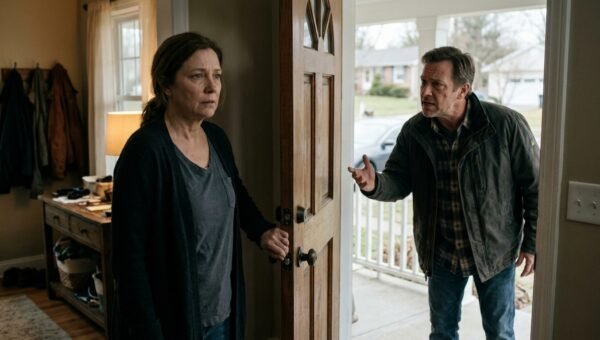
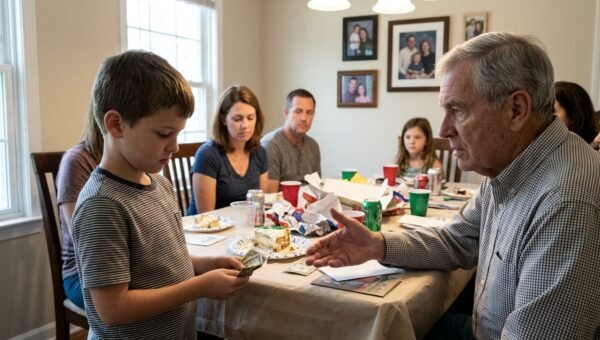
My father told me the family cemetery plot beside Mom was reserved for my brother, Kevin. He said it at Sunday dinner, right between passing the butter and asking if anyone wanted more sweet tea.
“Your brother needs to be near family someday,” he said, not even looking up from his roast beef. “It is already decided, Laura.”
I thought that was the whole problem. I thought my father was just doing what he had always done, putting Kevin first and treating me like the family helper who did not have feelings of her own.
But I had a very good reason for not reacting right away.
I was the one who had paid for both plots.
Seven years ago, right after Mom got her diagnosis, Dad sat at their kitchen table with his head in his hands. He did not have the savings, and he was terrified Mom would end up in a cheap county plot far away from her parents. I took $6,800 out of my own emergency savings. I paid the cemetery directly, got the deed placed in my name, and told Dad he would never have to worry about where Mom rested. He thanked me with tears in his eyes back then. Now, five years after her funeral, he was casually giving away the plot I owned.
I did not cause a scene at the table. I smiled politely, cleared the dishes, and drove home.
That night, I went into my home office and pulled the faded manila folder marked Oakridge Memorial Gardens.
When I opened the paperwork, one detail caught my attention: the original cemetery contract clearly stated that ownership transfers required the primary owner to sign in person with two identification cards, or submit a certified affidavit stamped by a licensed notary. Dad knew I owned it. He had watched me sign the initial papers.
I waited until Monday morning when I was alone. I took my lunch break early and drove to the cemetery office with my copy tucked inside my purse. I had not even decided what to say yet. I figured I would gently remind the staff that no changes could be made without me.
The cemetery manager, an older woman named Martha who had helped me plan Mom’s service, pulled up the file on her computer. She slid her glasses down her nose, clicked through two screens, and frowned.
“Laura,” Martha said softly, looking over the counter at me. “Someone was here three weeks ago trying to transfer plot 14-B using a notarized form. It had your signature on it.”
PART 2
The room felt completely still. Martha opened a dark green hanging folder on her desk and turned a single sheet of paper toward me.
There, stamped with a blue round seal, was a formal quitclaim transfer for plot 14-B. My full legal name was printed across the top. Below it was a signature that looked close to mine, but the slant was wrong and the loops in the letters were too tight.
“I flagged it right away,” Martha told me. “The notary stamp belongs to a mobile notary across town, but our system requires owner verification on file before we record any deed change. I mailed a notice to the address listed on the form to confirm you actually authorized it.”
“What address was on the form?” I asked.
Martha turned the paper slightly. “Forty-two Oak Creek Lane.”
That was my father’s house.
He had not just assumed I would roll over and give the plot to Kevin.
He had taken steps to take it from me without my knowledge, intercepting any mail that might alert me.
I asked Martha for a photocopy of the forged document and the notary’s license number. She handed it to me along with a formal complaint form. “If this isn’t your signature, Laura, you need to know this is a class three felony in this state. If I report this to the county board, it becomes a police matter.”
“Give me forty-eight hours,” I said.
I walked out to my car and sat in the front seat with the air conditioning blowing cold air against my face. I looked down at the notary’s name: Brenda Collins. I searched her name on my phone, found her small tax and notary service on 8th Street, and dialed.
When Brenda answered, I gave her the document number and said I was following up on a cemetery deed transfer.
“Oh yes,” Brenda said, remembering quickly. “An older gentleman brought that in with his son. The son said his sister was bedridden and unable to travel, but he presented a copy of her driver’s license.”
My stomach tightened. Two months earlier, Kevin had helped me move my old washing machine. He had asked to borrow my truck, and I had left my purse on the kitchen counter for three hours while we carried boxes. He must have taken a picture of my license.
“Did you witness the signature?” I asked.
A long pause followed on the line. Brenda cleared her throat, her voice suddenly nervous. “Well, he had a power of attorney paper that looked valid, but if there is an issue…”
“I never signed that paper, Brenda. And my brother does not have power of attorney over me.”
She began stammering an apology, clearly terrified for her notary license. I hung up. I did not want Brenda Collins. I wanted the truth from the two men who thought my quiet nature was the same thing as weakness.
PART 3
I drove straight to my father’s house. It was two in the afternoon, the time Kevin usually stopped by to have coffee with Dad before his evening shift at the warehouse.
Sure enough, Kevin’s blue pickup was parked in the driveway behind Dad’s sedan.
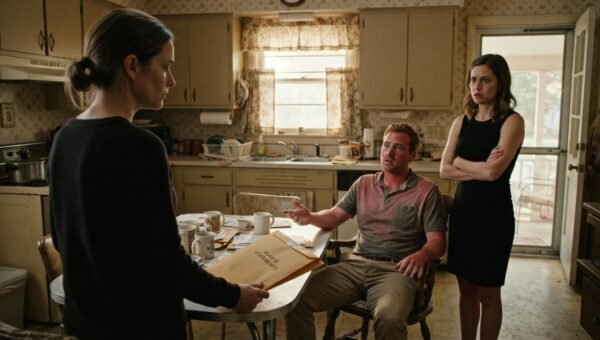
I did not knock. I used my key, opened the door, and walked into the kitchen. Both of them were sitting at the small wooden table, an open sports magazine between them and two half-empty mugs of coffee.
Dad looked surprised. “Laura? What are you doing here on a workday?”
I set the photocopy of the forged quitclaim deed right on top of his magazine.
Neither of them spoke for five seconds. Kevin’s hand stopped midway to his cup. Dad looked down at the paper, his mouth opening slightly, then closing.
“Martha at Oakridge called me,” I said, keeping my voice very level. “She has the mobile notary’s log. Brenda Collins is prepared to identify Kevin to the police as the person who handed her this paper with my forged name.”
Kevin shoved his chair back and stood up. “Now hold on, Laura. Do not go throwing words around like police. We were just trying to get things settled.”
“Settled?” I looked right at him. “You stole a picture of my ID from my purse. You forged my name on a legal transfer. And Dad sat at dinner on Sunday telling me the plot was already promised to you.”
Dad’s face flushed red. He put his hands flat on the table, trying to sound like the head of the house. “Kevin has had a hard few years, Laura. He has no savings. He went through that divorce. If anything happens to him, he has nothing. You have a good job. You have a husband. You have a pension coming. You can buy another plot anywhere in the county.”
“I bought those plots when Mom was dying,” I said, each word feeling heavy in my chest. “I paid sixty-eight hundred dollars while you were crying in this exact kitchen. I bought the plot beside Mom so I could rest next to the woman who raised me. And you decided behind my back that Kevin deserved my sacrifice more than I did.”
“It is just dirt, Laura!” Kevin shouted. “You always make everything about money! You hold that check over Dad’s head like you are better than us!”
“No,” I said, looking Kevin in the eyes until he looked away toward the sink. “It isn’t about the money. It is about the fact that you think you can take whatever I work for, just because Dad taught you that you never have to earn anything.”
I turned back to my father. He looked smaller now, his shoulders hunched. The anger in his eyes had turned into plain embarrassment.
“Here is what happens next,” I said. “I am walking back into Martha’s office tomorrow morning. I am filing a permanent freeze on that plot deed with an affidavit of fraud. If either of you tries to touch that file again, or if you ever bring this up to me again, I will file the criminal report with the sheriff’s department. Brenda Collins has already offered to give a statement to protect her own license.”
Dad stared at the table. He did not defend Kevin. He did not apologize. He just looked tired and ashamed.
“You wouldn’t do that to your own family,” Kevin mumbled, though he sounded defeated.
“Try me,” I said.
ENDING
I walked out of the house and drove back to Oakridge Memorial Gardens that same afternoon. Martha helped me fill out the fraud affidavit and locked the deed account under password protection. The plot beside my mother is legally secure. Nobody can touch it without my direct physical presence and my thumbprint on the cemetery ledger.
My father called twice that week, leaving short voicemails asking if we could talk about Christmas plans. I did not call him back. Kevin sent one angry text message accusing me of ruining the family, then went completely silent.
It has been six months now. The silence in my phone took some getting used to, but the peace in my chest is real.
Last Saturday, I bought a pot of yellow chrysanthemums, Mom’s favorite flowers, and drove out to Oakridge alone. The cemetery was quiet, just the wind moving through the tall oaks near the fence. I walked up the gentle slope to section 14.
Mom’s stone was clean, the gray granite cool under my fingers. Beside her, plot 14-B was a simple square of green grass, empty and undisturbed under the autumn sun. I knelt down, set the flowers directly between the two spaces, and smoothed the grass with my hand.
I spent forty years letting my father decide what I was worth to this family. Standing by Mom’s grave, I knew I would never let anyone make that choice for me again.