PART 1
I sat near the back of the fellowship hall with my chicken casserole untouched on my paper plate.
Two hundred and ten people from Grace Baptist were gathered for the autumn potluck, balancing sweet tea in foam cups and laughing around long folding tables. Earl wasn’t with me. He was at home on the sofa with a yellow tint to his eyes and swollen ankles, sleeping through another afternoon because moving across the living room took more air than his lungs could hold.
At the front of the room, Pastor Williams tapped a butter knife against the microphone. He smoothed his jacket, gave everybody that warm, polished smile he used every Sunday from the pulpit, and unfolded a white sheet of paper.
“Before we have dessert,” Pastor Williams said, his voice carrying clearly through the speakers, “I want to share the third-quarter report from our ministry board. Because of your faithful giving, our church benevolence fund helped fourteen families this year.”
A light round of applause swept across the room. People smiled and nodded.
My hand went up.
I didn’t plan the exact second it happened. I had told myself in the parking lot that I would eat, drop off the tin of lemon bars for the hospitality committee, and head straight back to Earl. But hearing that number spoken out loud, delivered like an achievement to be proud of, snapped whatever quiet reserve I had left.
“Helen?” Pastor Williams squinted into the fluorescent light toward the middle tables, noticing my raised arm. “Did you have a praise report?”
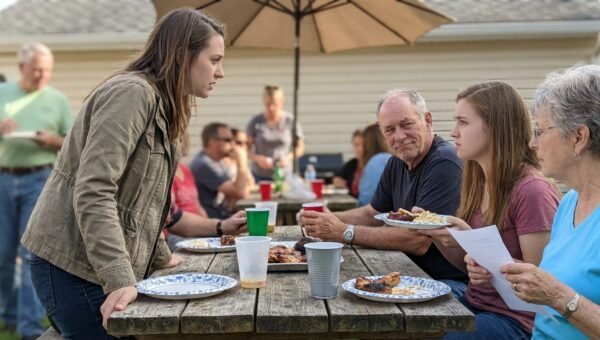
“Why wasn’t my family one of them?” I asked.
The room went dead silent. Utensils stopped hitting plastic plates. The deacon sitting two chairs down from me turned his head so fast his collar caught on his neck.
Pastor Williams cleared his throat and adjusted his glasses. “Helen, this isn’t really the proper setting for private matters. We can talk about this during office hours.”
“When is the proper time?” I stood up. My knees were stiff, but I didn’t sit back down. “Earl is on the regional waiting list for a liver transplant. The medical bill estimate after insurance is $387,000. We turned in our application to your benevolence committee back in April. You sat in my kitchen, drank sweet tea, and looked me in the eye. You told me the fund was empty.”
“Helen, please,” he said, lowering his voice into that soothing, pastoral tone he used when someone was causing a scene. “The church’s resources are limited. We had severe shortfalls this spring, as the deacons know. We pray for Earl every Wednesday night.”
“You told me there wasn’t a dollar left for catastrophic medical emergencies,” I said.
I reached down into my canvas tote bag on the floor. I pulled out a heavy manila folder stuffed with photocopied bank records.
“I have the statements here from First National,” I said, holding them up so the deacon board could see the official bank letterhead. “Between May and August, the benevolence account didn’t sit empty. It had $94,000 in outgoing payments. Every single check went to one vendor.”
Pastor Williams gripped the wooden sides of the podium until the knuckles on his left hand turned white.
“Every dime,” I said, “went to a cosmetic procedures clinic in Shelbyville. The one registered to your daughter.”
PART 2
The room stayed completely quiet for three full seconds before the whispers started.
“Helen, sit down,” Tom Bradley said. He was head of the deacon board and owned the hardware store on Main Street. He stood up from the head table, holding both hands out like he was trying to calm a spooked horse. “You don’t understand what you’re looking at. Those are internal church records.”
“I understand numbers,” I said. “And Earl has been paying his tithe here for thirty-eight years.”
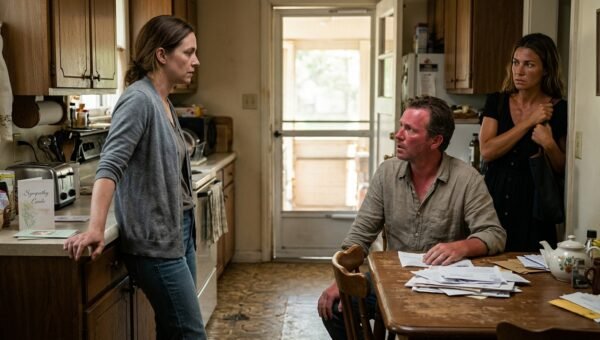
The paperwork in my hands had not come from gossip. Three weeks earlier, my niece Clara, who works in commercial lending at First National, came over to bring us beef stew. She saw Earl sleeping in the recliner with his medication boxes lined up on the end table. I had broken down crying about the co-pays, telling her how Pastor Williams said the church’s emergency fund had gone dry after the roof repair in March.
Clara hadn’t broken bank privacy laws or pulled private personal accounts, but she did look at the public signature cards and standard non-profit ledger verification documents that our church filed every year to renew its seasonal credit line. Grace Baptist kept its benevolence account under a specific sub-entity called Grace Outreach Ministries. Clara told me that the authorized signer wasn’t the board of deacons. It was just Pastor Williams and his daughter, Megan.
Megan had moved to Shelbyville two years ago to open what she called a medical spa. She did Botox, skin tightening, and specialty laser treatments. On Facebook, she posted videos showing off marble countertops, imported recovery chairs, and private consultation rooms. Meanwhile, when I sat in the church office in April with Earl’s medical files in my lap, Pastor Williams had handed me a card with a local food pantry phone number on it.
“Helen, you are out of line,” Pastor Williams said into the microphone. His voice had lost its gentle tone. It was tight and thin now. “Those disbursements were legitimate short-term investments approved for ministry outreach support. You are publicly slandering this congregation based on stolen documents.”
“They aren’t stolen,” I replied. “They’re printed public corporate filings and vendor debit sheets provided to the lending committee. Five separate checks. May 12th, June 4th, July 19th, August 2nd, and August 28th. All written to Shelbyville Aesthetics LLC. All signed by you.”
Deacon Bradley turned around and looked up at Pastor Williams. He didn’t look angry yet; he looked bewildered. “Marcus, what is she talking about? You told the board that fund was tapped out for the youth mission bus repair.”
“We will discuss this in the conference room after dinner,” the pastor snapped, stepping back from the microphone. “Not in front of the congregation.”
“No,” Clara’s mother, my sister Martha, stood up from the far side of the room. She was seventy-two and had taught Sunday school in that basement for three decades. “You don’t get to hide in the conference room, Marcus. My brother-in-law is dying in his recliner five miles from here. Read the checks.”
PART 3
Two other deacons walked up to the front table. One of them, Ray Miller, walked straight down the center aisle toward me. He didn’t look threatening. His face was gray.
“Helen,” Ray whispered, reaching out his hand. “Let me see.”
I handed him the folder. He opened it right there under the gymnasium lights. I had used a yellow highlighter on every line item that matched the clinic’s tax identification number.
Ray flipped through three pages. He didn’t speak. He just stopped on the page showing the July payment of $26,000, which had been marked in the memo line as “Community Wellness Initiative.” The check had cleared straight into the business account of Shelbyville Aesthetics.
Ray looked up from the paper and stared at Pastor Williams. “Marcus, your girl bought high-end laser equipment this summer. She posted about it on Instagram. She called it a blessing from God.”
“It was an interest-free loan from an auxiliary account,” Pastor Williams said, his voice shaking now. He didn’t bother using the microphone. “The clinic was facing supply chain defaults. Megan was going to lose her lease. She’s my daughter. She is family. She signed an internal promissory note to repay the church in full over five years. The board was going to be notified at the annual meeting in January.”
“A five-year loan?” I said. My voice was loud enough for every ear in that hall. “Earl doesn’t have five years. When I asked you for eight thousand dollars to cover his initial transplant intake deposit at Vanderbilt, you told me God would make a way through our personal savings. You told me we needed to learn to rely on family.”
“Helen, that’s enough,” Pastor Williams said, but nobody moved to back him up.
“It is enough,” I said. “Every family in this room put ten, twenty, or fifty dollars into those brown benevolence envelopes every single Sunday thinking it went to heat bills, groceries, and medicine for the sick. You took ninety-four thousand dollars of that money and handed it to your daughter so she could buy machines to smooth out rich women’s wrinkles.”
The room erupted. Two elderly women at the front table began gathering their purses. Deacon Bradley reached over, took the wireless microphone off the stand, and switched it off.
“This meeting is adjourned,” Bradley announced, his voice carrying over the crowd without the speakers. “Marcus, you, Ray, and the rest of the board are coming with me to the office right now. Nobody leaves until we have the checkbook and the account statements on the table.”
Pastor Williams looked at the crowd. Not a single person was smiling. People who had known him for fifteen years looked away when his eyes passed over them. He turned around without another word and walked through the double doors behind the platform.
ENDING
I didn’t stay for the meeting in the church office. I didn’t care about their board procedures or their excuses. I picked up my casserole dish from the side table, walked out to my ten-year-old Buick, and drove home.
When I walked through our front door, the house was dark except for the small lamp next to the sofa. Earl was awake, propped up on two pillows, watching a baseball game with the sound turned low.
“How was the potluck?” he asked, his voice gravelly. “Did they like the lemon bars?”
“They were fine,” I said. I sat on the edge of the coffee table, took his cold hand in mine, and rubbed his knuckles. “I talked to the deacons.”
The aftermath moved faster than I expected, though none of it was clean. Within forty-eight hours, the deacon board suspended Pastor Williams without pay. By the following Tuesday, they had called in an independent accountant to audit every single account Grace Baptist owned.
Megan’s business lawyer in Shelbyville sent a formal letter offering an immediate settlement. She couldn’t produce an actual board-approved promissory note because none existed. To avoid criminal fraud charges being filed by the church trustees, Megan took out a high-interest commercial loan against her clinic equipment and wired the entire $94,000 back into the church’s benevolence account by the end of the month.
On Friday morning of that same week, Deacon Bradley and Ray Miller pulled into my driveway. They didn’t come with excuses. They sat at my kitchen table, drank black coffee, and put a church check for $15,000 on the placemat in front of me.
“This is for Earl’s intake deposit at Vanderbilt,” Bradley said, looking down at his coffee mug. “It was approved unanimously this morning. And we’ll cover the housing stipend while you’re in Nashville for the surgery.”
I looked at the check. The memo line didn’t say anything fancy. It just said “Medical benevolence – Earl Vance.”
I took the check to the bank an hour later.
Pastor Williams submitted his resignation letter the following Sunday, read aloud by Deacon Bradley to half-empty pews. Megan closed her clinic six months later and relocated somewhere near Louisville.
Earl got the call from Vanderbilt three weeks ago. We spent twelve days in Nashville, living out of a small medical apartment while the surgical team did their work. He’s back home now, sitting on the back porch in the morning sun, his skin looking clearer and pinker than it has in two years.
I don’t go to Grace Baptist anymore. Martha and I started attending a small Methodist chapel two towns over where they don’t have fancy lights or quarterly speeches.
Every Sunday when the offering plate comes down the aisle, I put my envelope in. But I don’t give blindly anymore. Trust is something you earn every day, and once you watch somebody steal from the sick, you never look at a pulpit the same way again.