PART 1
For five years, I kept the nursery door closed.
It was the small bedroom at the end of the hall in my small house in Canton, Ohio. Inside, the pale yellow crib still sat against the wall, made up with a white cotton sheet I bought in the summer of 2021. Our baby girl, Clara, died four days before my scheduled delivery date.
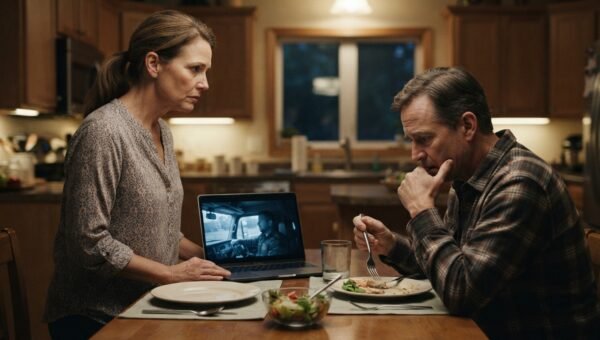
The doctor told me her heart had simply stopped. In the quiet horror of that hospital room, my husband, David, did not hold my hand.
He stood near the window with his arms crossed, staring down at the parking lot.
“You wouldn’t slow down,” he told me that evening while I lay in bed, empty-handed and hollow. “I told you to quit that retail job a month ago. You kept carrying those heavy stock boxes up the ladder. You did this.”
Those words became an iron cage around my chest. I believed him because grief makes you look for a reason, and blame felt like the only explanation within reach. Three weeks after the burial, David packed two suitcases and left. He did not go to an apartment. He went straight back to his ex-wife, Brenda, the woman he had divorced two years before he met me.
“I cannot look at you without thinking about what you cost me,” he said on the front porch before he drove away.
I spent the next five years working 40 hours a week at the county clerk’s office, walking home in the cold, and carrying the quiet belief that my own carelessness had ended my daughter’s life.
I stopped seeing friends. I stopped going to church. I felt too dirty with failure to sit near people with healthy grandchildren.
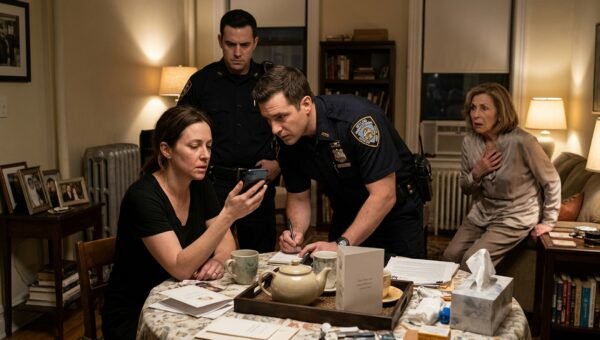
Then, on a rainy Tuesday morning in October, my phone rang. It was an elder from David’s church. David had suffered a massive coronary event at his desk at age 52. The paramedics could not bring him back.
I sat on my sofa for four hours, unable to cry, unable to eat, just looking at the gray rain beating against the glass. The man who had judged me was gone, but the sentence he handed down was still alive in my head.
At 4:00 that afternoon, a sharp knock rattled my front door.
I opened it and found Brenda standing on the porch. Her hair was damp from the rain, her mascara was smeared gray across her cheeks, and she was clutching an old brown accordion folder against her winter coat.
I thought she had come to warn me away from the funeral. I thought she wanted to make sure I claimed nothing from his modest pension.
Instead, Brenda dropped to her knees on my welcome mat. She looked up at me with red, swollen eyes, gasping for breath, and said, “The real reason your baby died was David.”
PART 2
I stood in the doorway, staring down at her.
“Get up, Brenda,” I said quietly. My hands were shaking against the wood frame of the screen door. “David is gone. You do not need to come here and cause a scene.”
“I am not causing a scene, Sarah,” she choked out. She pulled herself up by the porch railing, her knuckles white. “Please let me inside. Five minutes. Just give me five minutes, and if you want me to leave, I will never speak to you again.”
I stepped back and left the door open. She walked into my small living room, leaving wet boot prints on the linoleum.
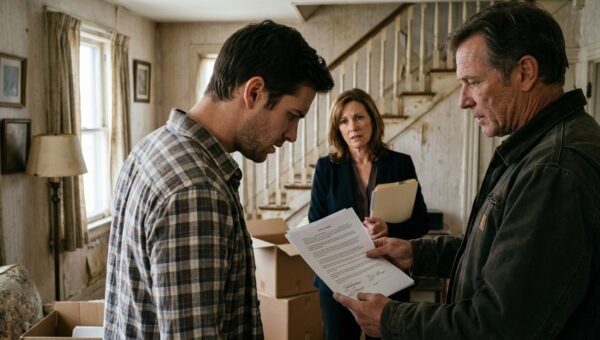
She did not sit on the couch. She went straight to my dining table, unhooked the elastic band on the brown folder, and laid out three stapled packets of paper.
“David called me four days before Clara died,” Brenda said, her voice shaking so hard she had to stop to swallow. “He called me in a total panic from his car. He told me he made a terrible mistake, and he asked me if I could lend him $4,200 immediately.”
I frowned at her. “What are you talking about?”
“Our divorce agreement required him to pay my health insurance until I turned 50,” Brenda explained. “In 2021, his small remodeling business hit a dry spell. He didn’t have the money for both households. So instead of telling either of us, David secretly stopped paying the premiums on your family health policy through his trade association. The coverage lapsed on the first of that month.”
I felt my breath catch in my throat. “We had coverage. We had the cards in our wallets.”
“The policy was canceled for non-payment thirty days earlier,” Brenda said. She pushed the top document toward me. It was a formal termination notice from the insurance group, dated six weeks before Clara’s due date. “You didn’t know because he intercepted the mail at his workshop. But that isn’t the worst part.”
She began to cry again, pressing a fist against her mouth.
“Brenda, what are you saying?” I asked.
“On the Thursday before Clara died, your obstetrician’s clinic called your house three times,” Brenda said. “You were at your mother’s house helping her with groceries. David answered the third call. The head nurse told him that your routine blood panel and the late ultrasound from that Tuesday showed severe placental insufficiency. Your fluid was dangerously low. They told him you needed to go directly to the hospital labor ward for an emergency induction that very afternoon.”
The room seemed to shrink until there was nothing left except the ticking of the grandfather clock in the corner.
“They told him to bring me in?” I whispered.
“The nurse was clear,” Brenda said. “She told him every hour counted. But David panicked. He knew that the moment you walked into admissions without valid insurance, the hospital would discover the policy was dead. He had an outstanding lien from his truck, he had no savings, and he was terrified of being exposed as a broke fraud. He told the nurse you were resting and that he would drive you straight to the emergency room.”
She pointed to a yellow carbon copy in the folder. It was an incident log from the clinic, stamped by the medical records department.
“He never told you,” Brenda sobbed. “He told himself the doctors were just being cautious. He thought if he waited until Monday, he could scramble to borrow money or figure out a story. He gambled your baby’s life to save his own pride.”
PART 3
I could not speak. The walls of the room felt distant.
For five years, I had examined every step I took that week. I had remembered carrying a box of receipt tape at work. I had remembered walking down the porch steps too quickly. I had remembered drinking a cup of caffeinated tea and wondering if that single mug had poisoned my daughter. David had looked into my face every day after the burial and let me drown in that poison.
“How do you have this?” I asked, my voice barely louder than a whisper.
“David kept everything,” Brenda said, wiping her face with the sleeve of her coat. “He kept it locked in his metal tool chest in the garage. Three weeks ago, when the doctor told him his heart was failing and that surgery was too risky, he started having nightmares. Last night, before he collapsed at work, he wrote me a five-page letter. He told me where the key was. He told me that if anything happened to him, I had to bring this file to you.”
She handed me the letter. I recognized David’s sharp, slanted handwriting immediately.
I read the third page twice.
*I told Sarah it was her fault because I could not look in the mirror,* David wrote. *The clinic called at 1:15 PM on Thursday. Nurse Miller told me the baby was in distress. I stalled because of the insurance bill. By Sunday night, when Sarah said she couldn’t feel Clara moving, I already knew what I had done. I blamed her so she wouldn’t ask to see the clinic records. God forgive me.*
My hands stopped shaking. The strange, frantic panic that had lived in my ribs for five years suddenly went cold and still.
“He went back to you because you didn’t know,” I said, looking up at Brenda.
“He came back because he was a coward,” Brenda answered plainly. “He knew that if he stayed with you, every time you asked a question or looked at Clara’s baby blanket, he would see what he did. With me, he could pretend he was just an unhappy man whose second marriage fell apart.”
Brenda sat down on the wooden chair, looking smaller than I had ever seen her.
“I am so sorry, Sarah,” she said. “I didn’t know any of this until this morning when I opened that toolbox after the hospital called me. I couldn’t let you spend another night thinking you killed your child.”
I did not scream. I did not throw the papers. I walked into the kitchen, turned on the tap, and filled a glass of cold water. I drank it slowly, feeling the cold liquid move down my throat.
“The funeral is on Friday,” Brenda said from the other room. “You don’t have to come. But if you want to be there, nobody will stop you.”
“I have nothing to say to him,” I said. “And he has nothing left to say to me.”
ENDING
Brenda left twenty minutes later. She offered to take the papers back, but I told her no. I kept the clinic logs, the canceled insurance notice, and the letter written in David’s hand.
That evening, I didn’t turn on the television. I sat at the kitchen table under the yellow overhead light and read the nurse’s notes one more time. The nurse had written: *1:18 PM. Spoke with husband, David. Informed him of critical ultrasound values. Advised immediate transport to labor and delivery. Husband stated they are en route.*
Clara had not died because I lifted a box. Clara had not died because my body was weak or broken or unfit to be a mother. My daughter died because the man who promised to protect us was too small to admit he was drowning in debt.
At eight o’clock, I stood up and walked down the hallway to the nursery door.
I turned the brass knob that had stayed cold for sixty months. The hinges squeaked slightly as the door swung open. The room smelled of old paint and settled dust.
I walked over to the crib. I picked up the small white cotton sheet, folded it neatly into a square, and carried it back to the living room. I placed it inside the brown accordion folder right on top of David’s confession.
Tomorrow, I would call the local charity truck to come haul the crib away. I would call a painter to paint the walls a bright, clean white.
I walked onto the front porch and took a deep breath of the damp October air. The guilt was gone. It had not vanished gently; it had been torn away by an ugly truth, leaving an ache that would remain with me for the rest of my days. But as I looked up at the wet streetlights shining through the bare trees, I knew I was finally standing on my own feet again.