PART 1
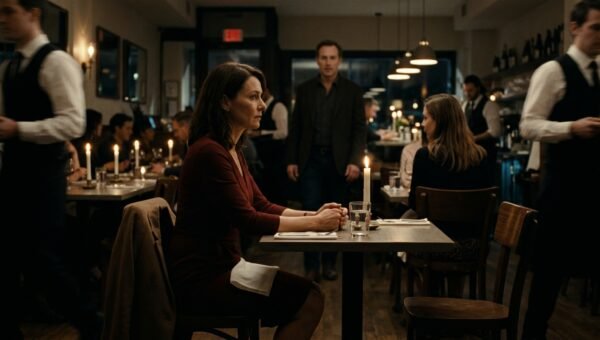
My late husband’s son, Daniel, and I have run the Bellweather Theater together for nine years. We never called each other mother and son, but we learned how to disagree without walking away. Last Tuesday, he asked me to sign a notice saying the theater had to close because the roof was unsafe.
The notice was meant for the town council. Daniel wanted them to approve a sale to a storage company before the end of the month.
He said the theater was losing money, the roof leaked over the balcony, and the new owner would take the building off our hands without making us pay for repairs.
“I’m not asking you to love the deal,” he said. “I’m asking you to be honest about the building.”
I had spent most of my adult life in that theater. My husband, Frank, had bought it when the old owner retired. I ran the box office and cleaned the lobby; Daniel learned to thread film before he was old enough to drive. When Frank died, we inherited equal shares. The theater was the one thing we’d managed to keep steady through the funeral, the paperwork, and the years when neither of us knew what the other needed.
I had seen the leak. A brown stain had spread across the ceiling over row H, and a bucket sat there whenever it rained. I had not seen a report saying the roof was dangerous.
“What does the inspector’s report actually say?” I asked.
Daniel folded his arms. “It says there’s water damage. It says the roof needs work.”
“That isn’t the same as unsafe.”
He told me a contractor had warned him about the cost. The storage company had offered enough to pay the theater’s back taxes, settle our remaining loan, and give him a little breathing room. He’d been covering payroll on his credit card for months. I knew the numbers were bad. I also knew he’d skipped two paychecks of his own to keep the projectionist and the weekend staff paid.
I asked for the inspection report. He said it was in the office and that the sale would fall through if we waited. Then he left to meet the buyer.
I searched the office file cabinet that night. The report wasn’t there, but I found a folded envelope in the drawer where Frank used to keep the brass ticket punch.
Inside was a copy of a structural engineer’s assessment, dated three weeks earlier. It said the roof had a localized leak and needed repair, but the beams were sound. The work was estimated at less than half the figure Daniel had given me.
There was also an email printed behind it from the contractor. He’d offered to schedule the repair in stages so the theater could stay open. Daniel had replied that he needed a firm closure date for the buyer.
I read it twice. The sale might still have been the right choice. The theater was struggling, and Daniel was tired. But the notice he wanted me to sign said the building could not safely admit the public. The engineer had said the opposite.
I put the papers in my bag and called Daniel. He answered on the third ring.
“You found the report,” he said.
“You knew the beams were sound.”
“I knew the theater was still losing money.”
“Then say that. Don’t say the building is unsafe.”
He was quiet for a moment. Then he said he’d spent six months trying to keep the place alive while I talked about one more fundraiser, one more film series, one more season.
He didn’t want to be the person who closed it. He also couldn’t keep pretending another good month would fix everything.
That was a believable reason. It wasn’t permission to use my signature to make a false claim.
The council hearing was Thursday. I told Daniel I would bring the engineer’s report and ask them to consider the repair estimate before voting. He said that would embarrass him in front of the buyer and could cost us the offer.
“It may,” I said. “But they need the real facts.”
On Thursday, I arrived early and sat in the second row with the envelope on my lap. Daniel stood near the back, pale with anger. The council chair called us forward. I placed the report on the table and began by saying the theater had serious financial problems, but I could not certify that it was unsafe.
Before I could explain the repair plan, the storage company’s representative stood up. He said he had a document showing the theater could not remain open during repairs. Daniel looked at me, then at the envelope in my hand.
The representative slid the document across the table. At the bottom was a signature I recognized. It was Daniel’s, dated two days before he asked me to sign.
PART 2
The document on the council table was a private agreement with the storage company. Daniel had signed it as the managing partner on Sunday night, forty-eight hours before he walked into my ticket booth with his pen ready.
In the agreement, Daniel had committed the Bellweather to a ninety-day voluntary shutdown starting the first of the month. If the building closed, the storage developer held an exclusive option to purchase our commercial parcel at a discount, covering the $18,400 in back property taxes and the outstanding $42,000 equipment lien. But there was a penalty clause. If the theater failed to vacate and declare the structure non-operational by Friday, Daniel became personally liable for the buyer’s preliminary site inspection fees, totaling $6,500.
The council chair, Marcus Vance, adjusted his reading glasses and looked down at Daniel’s signature, then over at me.
“Mrs. Miller,” Marcus said, “your stepson has already filed an emergency operational waiver with the zoning board based on this exact agreement. Are you telling us you didn’t authorize this?”
Daniel stepped forward from the back row. His boots clicked hard against the linoleum floor.
“She didn’t sign the developer’s contract,” Daniel told the council, his voice tight. “I signed it because the deadline was midnight Sunday. The bank was threatening to accelerate the lien, Marcus. You know our balance sheet. We owe eighteen thousand dollars to the county alone. The storage group was the only buyer willing to clear the tax debt before the county auction next month.”
“You told me the roof was condemned by the county inspector, Daniel,” I said, turning to him right there in front of the six council members. “You stood in my kitchen and said an engineer ordered us to shut the doors immediately.”
“I said the roof was failing,” he answered, looking straight at the council table instead of looking at me. “And it is. It drips into the lobby every time it pours. If we do staged repairs like the contractor suggested, we have to pay sixteen thousand dollars out of pocket over the next three months. Where are we getting sixteen thousand dollars, Nora? We took in eleven hundred dollars total from ticket sales last weekend. My credit card is maxed out from the air conditioner compressor we had to replace in July.”
The developer’s representative, a man named Warren who carried a leather portfolio under his arm, cleared his throat.
“The purchase agreement is conditional on clear title and mutual consent from both deed holders,” Warren said smoothly. “If Mrs. Miller refuses to join the sale petition today, the storage company withdraws its offer to settle the municipal liens. The property will proceed to tax sale, and our firm will pursue Mr. Miller directly for the six-thousand-five-hundred-dollar breach penalty.”
Daniel’s jaw tightened. That was why he had pushed so hard on Tuesday. He wasn’t just trying to get rid of a dying business. He had backed himself into a corner where my refusal to lie meant his personal financial ruin.
“Give us five minutes in the hall, Marcus,” I said to the council chair.
Marcus nodded once. “Five minutes, Nora. We have a sewer assessment on the docket after this.”
I took the envelope with the engineer’s real assessment and walked out into the corridor. Daniel followed me, keeping his hands jammed deep into his coat pockets. The hallway was empty except for a row of plastic chairs and a bulletin board covered in faded municipal notices.
“Why didn’t you show me their contract on Sunday?” I asked.
“Because you would have said no,” he said. “You say no to every broker who calls. You say no to every change. My dad bought that projector in 1994, Nora. You’re trying to keep 1994 alive on twenty-five-dollar memberships and weekend matinees. I’ve been drowning for two years, and every time I tell you we’re out of cash, you tell me we just need to plan another classic film series.”
His voice didn’t sound angry anymore. It sounded exhausted.
“You lied about the safety inspection,” I said. “You asked me to swear to the town council that our building was a hazard to the public. If I sign a false affidavit, the historical district commission revokes our preservation status automatically. That means the theater gets demolished. You didn’t just want to sell the business. You made a side deal to let them tear it down.”
Daniel stared at the floor tiles. He didn’t deny it.
PART 3
The developer hadn’t offered to preserve the theater’s facade, which Frank had spent seven years restoring with his own hands. The storage company needed the land for a three-story prefabricated facility, and the only way around the historic preservation overlay was an official finding of structural failure.
“They promised me an extra fifteen thousand dollars cash on closing if the demolition permit went through without an appeal,” Daniel said quietly. “I wasn’t keeping it for myself. I was going to give it to you for your retirement account. You don’t have a pension, Nora. Frank left you the building and four thousand dollars in a savings account. What were you going to live on when the county locked the doors?”
The truth sat between us, plain and ugly. He had lied, cheated on the paperwork, and tried to manipulate my signature. But his panic had come from a real place. He was twenty-eight when his father died, suddenly saddled with half of an old brick commercial building, five part-time employees, and an older stepmother who treated every cracked tile like holy ground.
“You should have told me about the debt six months ago,” I said.
“You would have tried to sell Frank’s truck,” he replied.
“I would have,” I said. “Because the truck is just steel. This theater is a promise.”
I opened my purse. I pulled out my own bank statement from the community credit union on Elm Street. I had gone there Wednesday afternoon after finding the engineer’s report in the ticket punch drawer.
“I went to see George Higgins at the credit union,” I told him. “I took Frank’s life insurance annuity that’s been maturing for eight years. There is thirty-one thousand dollars in it. It was supposed to be my cushion if I ever needed assisted living.”
Daniel looked up, his eyes widening slightly. “Nora, don’t.”
“The contractor’s email said the roof can be stabilized for seven thousand dollars right now, with the rest spread over two years,” I said. “I can pay the seven thousand, and I can clear nine thousand of the county back taxes today. That buys us a twelve-month extension from the council. But I am not giving that money to a partnership where you sign papers behind my back.”
“What does that mean?” he asked.
“It means we go back into that room,” I said. “You tell the council that the structural notice was submitted in error because you misinterpreted the preliminary engineer’s notes. You tell Warren the deal is dead. And this afternoon, you and I go to the lawyer’s office on Market Street. You sign your half of the operating lease over to me for three years. You keep your equity in the deed, but I run the books, I control the bank accounts, and you get paid an honest hourly wage as the projectionist and building manager. No more credit cards. No more side agreements.”
“What about Warren’s six thousand dollars?” Daniel whispered. “He’ll sue me.”
“He won’t sue you,” I said, holding up the developer’s contract. “Because I read section four while you were walking up the aisle. Warren’s company signed this agreement before they registered as a foreign entity with the secretary of state. Frank taught me commercial filings thirty years ago. If Warren files a claim against you in small claims court, Marcus Vance will throw it out before lunch. Warren knows it too. That’s why he brought it to a town meeting instead of a judge.”
Daniel looked at me for a long time. For nine years, he had seen me as the woman who sold popcorn and worried about the dust on the velvet curtains. He had forgotten that I managed the theater’s ledgers long before he was old enough to sweep the aisles.
We walked back into the council chambers.
Marcus looked up from his desk. “Well?”
Daniel stepped to the microphone. His hands were shaking, but he kept his head up.
“Mr. Chairman,” Daniel said clearly, “I made an error. The building is not structurally unsound. We have an engineer’s assessment showing the main trusses are completely safe, and we have secured private financing to begin roof repairs on Monday morning. I withdraw the petition for the emergency variance.”
Warren gathered his papers without a single word, shoved them into his leather portfolio, and walked out of the room before the gavel even hit the block.
ENDING
We spent that evening sitting on the edge of the stage, watching the rain hit the skylight above the fly space. A steady drip fell into the galvanized bucket in row H, regular as a clock.
We had signed the partnership revision at four o’clock. The lawyer charged us two hundred and fifty dollars, which I paid with a check from my personal account. Tomorrow morning, nine thousand dollars of my savings would go to the county clerk to clear the oldest tax liens, and by Tuesday, a roofing crew would have tarps and scaffolding up on the north parapet.
It was not a victory that felt like celebrating. My safety net was half gone, and the theater was still old, cold, and hard to keep warm. Daniel had sat in the lawyer’s office in silence, signing every line where the notary pointed. He was embarrassed, and he was hurt that I had taken the steering wheel out of his hands.
“I really thought I was fixing it,” he said from the darkness near the footlights.
“You were trying to escape it,” I answered, looking out over the empty seats. “There’s a difference.”
“We’re still going to be broke in November.”
“Then we’ll be broke honestly,” I said. “And we’ll be here.”
I reached into my pocket and took out the brass ticket punch Frank had carried every Friday night for twenty years. The spring inside was worn, but it still clicked clean when you pressed it. I set it down on the stage floor between us.
Daniel looked down at the brass tool, then picked it up. He tested the spring against his thumb once, twice, before slipping it into his jacket pocket.
We didn’t hug. We never had been that kind of family. But when we locked the heavy front doors twenty minutes later, he took the key ring from my hand, turned the deadbolt until it clicked, and handed the brass ring back to me without saying another word.