The newspaper was folded in half across my blanket, and Harmon’s hand was still wrapped around mine.
He’d just finished reading me the county news. I can’t tell you what was in the paper that night. I remember the fold, his thumb rubbing the side of my hand, and the way he paused before he let go. At six every evening, he came to my bed at the county home and read aloud. He’d done it for two years.
The stroke took my voice two years ago. Not my mind. The doctors told Harmon I didn’t understand a word, that visiting would only tire him out. He came anyway. Every day, he paid $9 to park and sat with me. Fifty-three years of marriage, and I couldn’t tell him I knew he was there.
That night, while he was getting ready to leave, he said, “Back tomorrow, sweetheart, same as always.”
I squeezed once, as hard as I could.
His eyes came up to mine. He leaned close enough that I could smell the peppermint he always kept in his coat pocket.
“Martha, if that’s you… do it twice.”
I had to do it before he let go.
For two years, I’d been listening to people talk over me. I heard nurses discuss my care, heard the television in the hall, heard Harmon tell me what our daughter had said on the phone.
I understood all of it. The stroke had damaged my vocal cords and left the right side of my body almost useless. The first hospital notes called me non-responsive. That label followed me to the county home, where nobody seemed to have much time to question it.
I was there. I just couldn’t make my body show it.
I tried to squeeze again. My left hand felt like it belonged to someone else, except I could feel the blanket under my fingers and the warm skin of Harmon’s palm. I pushed everything I had into that small movement.
Once.
Then again.
Harmon made a sound I’d never heard from him before. He didn’t laugh or cry, not exactly. He just held my hand against his chest and looked at me like he was afraid to blink.
“Was that you?” he asked.
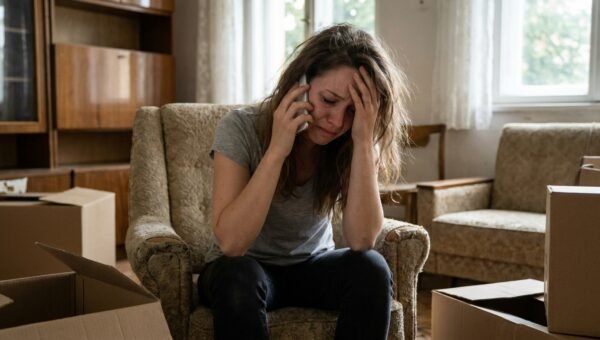
I couldn’t answer. My fingers had stopped moving. My arm ached, and my head felt heavy, like even thinking had taken all the strength I had.
He stayed until the visiting aide told him it was time to leave. He looked back at me twice from the door. I spent the whole night trying to save enough strength for the next day.
I’m not saying I was brave about it. I was scared. I was also mad at myself for not trying harder sooner, though I don’t know how a person tries harder when nobody thinks they’re in there.
The next day moved at the speed of a long shift. A cart rattled down the hall. A television played a game show nobody was watching. Brenda, one of the nurses, adjusted my pillow and told another aide I’d slept poorly.
I wanted to tell her I was awake. I wanted to tell her I’d been awake through every night she’d checked my breathing and every morning she’d asked whether I’d had a good rest. Instead I lay still. My body had made silence look like an answer.
At 5:57, I heard Harmon’s shoes in the hall.
He didn’t bring the paper that evening. He pulled his chair close and took my left hand between both of his. He looked tired, but not the ordinary kind of tired. He looked like he’d spent the day arguing with himself about whether he’d imagined it.
“I brought questions,” he said. “One squeeze for no. Two for yes.”
He waited. Then he asked if I remembered the month we got married.
I squeezed twice.
He covered his mouth with his free hand. I could see him counting the squeezes, almost as if he needed the number to stay still in front of him.
We’d married in June. I remembered the chapel too, though he didn’t ask yet. I remembered the cheap white flowers and the little fan somebody had left on a pew. I remembered Harmon’s tie being crooked, and me fixing it just before the photographer took our picture. I wanted to give him all of that, but my fingers could only give him two movements.
He leaned closer. “Was our first car a Buick?”
I squeezed once.
That old car had been a Ford, the color of dishwater, and it made a noise every time Harmon turned left. I’d teased him for years that the car could tell when he was lying because it rattled.
He tried another. He named the wrong place for our honeymoon.
One squeeze.
Then he said the right place. I squeezed twice.
He let out a shaky breath. “You remember.”
I did. I remembered the town, the tiny room, the smell of burnt toast from the café downstairs. I remembered Harmon saying we’d eat there anyway because we’d spent too much on the trip. That was the kind of thing I remembered. Not every date or face from every year, but the small things we’d lived in together.
Brenda came in to give me my medication. Harmon was still holding my hand, and he was smiling in a way I hadn’t seen since before the stroke. She noticed.
“Mr. Bell, it may just be a muscle spasm,” she said. “That can happen after a stroke.”
Harmon’s smile went away. “She answered me.”
“I know it feels that way,” Brenda said. She wasn’t being nasty. She was being careful, maybe, and busy. “We see movements that look purposeful sometimes.”
I heard that word, purposeful, and it made me want to laugh. If only I could.
Harmon nodded like he’d accepted it, because arguing with her wouldn’t make my fingers move. He sat quietly until she finished and went out. Then he lowered his head over our joined hands.
I squeezed once.
He looked up.
I squeezed once more.
His mouth trembled. I wanted to reach for his cheek, but the rest of my body wouldn’t follow. So I held on to his hand instead. It wasn’t much, but it was something he couldn’t explain away.
The next morning, Harmon arrived before the doctor’s rounds. He said he wasn’t leaving until Dr. Vance examined me while he was there. I’d never heard him speak to the staff that firmly. He wasn’t loud. He just didn’t move his chair from beside my bed.
Dr. Vance came in with Brenda and a chart. He asked Harmon what he’d seen.
“She answered questions only her wife could answer,” Harmon said, then corrected himself with a quick, embarrassed smile. “My wife. Martha.”
I would have teased him if I could. He’d called me his wife for fifty-three years, and he still got tangled in a sentence when he was upset.
Dr. Vance looked at my hand. “Post-stroke movements can be hard to interpret.”
“I understand that,” Harmon said. “But please ask her to do it.”
For a second, nobody spoke. Dr. Vance pulled the chart closer and stood beside my bed. He didn’t talk over me. He looked at my face.
“Martha, squeeze Harmon’s hand when I say the word ‘three.’”
I wanted to do it. I also knew what would happen if I couldn’t. My hand was tired from the night before. My arm felt thick and slow, and my head had started to pound.
Dr. Vance counted.
“One.”
I kept my hand still.
“Two.”
I focused on Harmon’s palm beneath mine.
“Three.”
I squeezed.
Not a twitch. Not a tremor. I closed my fingers around his hand and held on.
Harmon bent over our hands. Brenda stopped with her pen above the chart. Dr. Vance asked me to release, then asked me to do it again after a pause. I did. It hurt, and my arm shook after, but I did it.
He checked my eyes and asked me to follow his finger. He asked me to look toward the door, then toward Harmon. I followed. He gave simple directions, and I did what I could. I couldn’t speak, but I could hear and understand him.
Dr. Vance was quiet while he reviewed my chart. I was angry at the chart, at the old notes, at the years people had spent deciding what I couldn’t do. I was angry, too, at myself for taking so long to reach Harmon. I knew it wasn’t fair to put that on myself. I still did.
Dr. Vance finally said, “We need to reassess her communication and rehab needs.”
That was the first time in two years someone said “her” while looking at me.
The chart changed. The old plan had treated me as someone who needed basic care and little else. Now Dr. Vance ordered physical and speech therapy, with occupational therapy to help me use what movement I had. He said my speech might not return quickly, and he didn’t promise I’d get all my strength back.
I wasn’t asking for a promise. I wanted a way to answer.
Brenda started speaking to me directly after that. She asked if I wanted my head raised before lunch. She asked if the room was too warm. Sometimes I could answer with one squeeze for no and two for yes. It wasn’t fast, and it wasn’t easy. But it was an answer.
Harmon came at six that evening. He brought the newspaper again, but he didn’t open it. He brought an alphabet board, too, the kind made of laminated paper, and set it carefully on my blanket.
He’d been told I could use my left index finger to point if I practiced. I couldn’t manage much that first evening. My finger shook and landed between letters. Harmon didn’t rush me. He held the board steady and waited.
I began with H.
I had to rest before the next letter. He sat there with his coat still on, one hand under the board so it wouldn’t slide. The nine dollars for parking was still nine dollars. Only now he knew I had heard him all those evenings.
E.
Then R.
My finger trembled so badly I had to try twice. Harmon’s smile came through the lines on his face. I could see him trying not to help me, trying to let the word be mine.
E.
I tapped out H-E-R-E.