PART 1
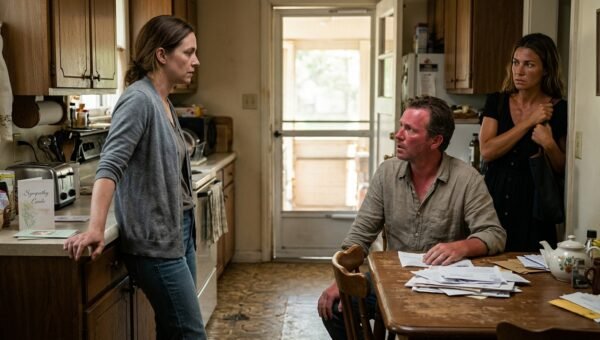
My brother, Greg, stood in front of the door with his feet set apart and told me I couldn’t go in. We had just come from the cemetery, still in our dark clothes, and my feet hurt from the low heels I only wear for funerals.
“It’s full of old weed killer, paint thinner, and rotten flooring,” he said. He didn’t look at my face. He looked somewhere near my left shoulder. “It isn’t safe. There’s nothing in there you need anyway.”
For fifty-two years, my role in our family was simple: don’t make trouble. When our mother died nine years ago, Greg took the cedar chest and the silver set because he claimed his daughter wanted them, and I let it go. When Dad started losing track of his days last summer, Greg visited once a month, took Dad to lunch, and left me with the laundry, the doctors, and the medication schedule. I never complained. Keeping the peace was a habit so old it felt like part of my skeleton.
So when he told me the shed was dangerous, my first instinct was to nod, swallow the tightness in my throat, and say okay. I told myself he was just stressed. Death makes people short-tempered.
Then two days later, after the out-of-town cousins left, I drove back over to Dad’s small brick house to collect his mail.
The padlock on the shed door was bright, shiny brass. It looked brand new against the weathered gray wood.
I don’t know why I walked around to the gravel driveway where the outdoor trash cans sat, but I did. The green bin was half full from the wake. Right on top, lying on an empty plastic water bottle bag, was a small receipt from the hardware store two miles down the road.
The purchase was for a heavy-duty Master lock. The total was twenty-two dollars and sixteen cents. The time stamped on the receipt was 7:14 AM on the morning Dad died.
Dad didn’t pass away until 11:30 that morning at the county hospice center. Greg had told me he was stuck in highway traffic all that morning and couldn’t get to the bedside in time. He hadn’t been on the highway. He had been at the hardware store, buying a lock for a shed that was supposedly full of junk.
I stood by the trash bin with that greasy slip of paper in my hand, feeling very foolish. Once you ask yourself the right question, you cannot pretend you didn’t notice the answer.
I waited until Friday morning. Greg had to drive back to Columbus for his regional sales meeting. As soon as his truck cleared the county line, I drove back over.
Greg had put his new padlock on the outer latch, but he had slipped the hasp over Dad’s old deadbolt without locking the bottom handle. The old brass key had been on Dad’s everyday ring, the one the nurse handed me in a plastic zip bag at hospice. I took that key out of my coat pocket and turned it in the lock.
The wood dragged hard across the dirt floor.
Greg had lied about the chemicals. There were no paint cans. There was no rotten floor.
Every single metal shelf along the walls had been completely wiped clean. All of Dad’s tools, his antique hand planes, and the old tackle boxes were gone.
The shed was entirely empty except for two things in the middle of the room: Dad’s old vinyl kitchen chair, and a silver cassette recorder sitting flat on the seat with the red pause button pushed down.
PART 2
I left the door wide open so the daylight could reach inside. The air smelled like dust and cedar shavings, but there was no chemical burn in my throat.
I walked over to the chair. The recorder was an old Realistic model from RadioShack, the kind with thick black plastic buttons and a built-in microphone on the front. Dad had used it years ago to tape his Sunday school lessons. Beside it lay a small sheet of yellow lined paper with my name, Sarah, written in Dad’s shaky, late-stage handwriting.
The note was short: “Press play. Don’t let Greg tell you it was his.”
My fingers were stiff when I hit the pause button. The plastic click sounded huge in the empty shed. The tape hissed for three seconds, and then Dad cleared his throat.
“Sarah,” his voice came out thin, with the shallow catch in his chest that had started around Thanksgiving. “If you’re listening to this, I’m gone, and Greg probably did what I told him not to do.”
He stopped to cough. I reached out and touched the vinyl back of the chair just to steady myself.
“Last month,” Dad continued, “Greg came out here while you were at the grocery store. He wanted me to sign a quickclaim on the five acres out back. Said he had business debts, sixty-two thousand dollars to some supplier in Dayton, and he was going to lose his house if he didn’t put up collateral. I told him no. I told him that land was bought with your mother’s family money, and it was meant to be split down the middle between the two of you.”
I stared at the empty shelves. Dad had farmed those five acres for hay every summer until his knees gave out.
“He got loud,” Dad said, his voice dropping lower. “He told me you didn’t need the money because your house was paid off and you didn’t have kids. He said I was being stubborn. Then he found the lockbox I kept behind the workbench where the deed and your mother’s wedding rings were. He took the whole box, Sarah. He told me he was holding onto it for safekeeping so you wouldn’t misplace it.”
A truck rattled down the country road outside, and my heart jumped. I thought it was Greg, but it was just the mail carrier slowing down at the box by the road.
“I called our lawyer, Mr. Finch,” Dad’s voice said from the speaker. “Finch told me taking the box didn’t give him ownership, but Greg wouldn’t bring it back. I knew he was waiting for me to die so he could take whatever else was out here before you looked. I left this recorder here because I knew he’d clean the place out the minute I was gone, but he’s too careless to look under the loose floorboard under this chair. The second set of deeds and Finch’s letter are down there.”
The tape ran out with a sharp snap.
I dropped to my knees on the dusty boards. Right beneath the chair’s legs, two pine planks were cut shorter than the rest. I pried them up with my fingernails.
Underneath was a flat metal baking tin wrapped in electrical tape. Inside wasn’t money or jewelry. It was a manila envelope with the county clerk’s seal, Dad’s original will dated two years back, and a carbon copy of a police report filed three weeks before Dad died.
Dad had reported his own son for unauthorized removal of personal property. The report listed the sixty-two thousand dollar debt Greg had admitted to, the lockbox, and Dad’s handwritten statement that he had never signed any property transfer.
My brother hadn’t put a padlock on the shed to keep out chemicals. He had put it there to keep me away until he could find whatever proof Dad had left behind.
PART 3
I took the tin, the envelope, and the tape recorder, and I walked out of the shed. I left the door hanging open. I didn’t bother to re-lock the brass padlock.
I drove straight to Mr. Finch’s office on Main Street. He was seventy-one, wore wire-rimmed glasses, and had handled our family’s affairs since I was in high school. When I walked in without an appointment, he took one look at the yellow legal pad in my hands and closed his office door.
“He tried to record a deed yesterday morning, Sarah,” Finch said before I even sat down. He didn’t sound angry; he just sounded tired. “Greg came in here with a quitclaim deed signed with your father’s name, dated four days before he went into hospice. The signature wasn’t your dad’s. I refused to file it.”
“He bought the padlock the morning Dad died,” I said, putting the hardware store receipt on his desk. “He cleared out Dad’s tools, too.”
“I know,” Finch said. “Your father came to see me right after that argument. He told me Greg was desperate. Greg’s framing business went under six months ago. He’s been borrowing from friends, banks, anyone who would listen. But your father was very clear. He wanted the property protected for you.”
Finch took the tape recorder, plugged a set of headphones into the jack, and listened to the tape in silence. His jaw set hard.
“This corroborates the report your father gave the sheriff,” Finch said, taking the headphones off. “Greg doesn’t have legal standing to touch the land or the house. The will leaves the home and the acreage to you, with an option for Greg to receive twenty-five percent of the liquid estate once debts are settled. But there are no liquid assets left. Greg already talked your dad into co-signing a personal loan last winter.”
The air went out of me. “How much?”
“Eighteen thousand,” Finch said. “The bank will take that from your father’s checking balance.”
I sat in that chair and thought about the nine years I had spent tiptoeing around Greg’s temper, making sure his holidays were easy, packing up leftovers so he wouldn’t have to cook, and convincing myself that his coldness was just stress. He hadn’t been stressed. He had been calculating how much he could take before anyone called him on it.
At four that afternoon, Greg called my cell phone.
“Why is the shed open?” he demanded. His voice was sharp, the way it always got when he was trying to put me on the defensive. “I told you to stay out of there. I had to turn around on the turnpike because a neighbor told me your car was in the drive.”
“I listened to the tape, Greg,” I said.
The line went completely dead for five seconds. No breathing, no car noise.
“What tape?” he asked, but the bite was gone from his voice.
“The one on the chair,” I said. “And I gave the envelope from under the floorboards to Mr. Finch.”
“Sarah, listen to me,” he started, his tone shifting instantly into the smooth, reasonable voice he used on customers. “You don’t understand what happened. Dad wasn’t in his right mind those last few weeks. He was confused. He thought I was stealing from him, but I was just trying to keep the creditors away from the property.”
“You bought the padlock at seven in the morning while Dad was dying alone in that bed,” I said. “You told me you were stuck in traffic.”
“I was trying to protect our family,” he said, but his voice cracked on the word family.
“You were protecting sixty-two thousand dollars,” I said. “Finch has the police report Dad filed. If you set foot on that property again without an appointment with the executor, Finch is filing the report with the county prosecutor.”
“You’re going to ruin my life over old tools and dirt?” he yelled.
“No,” I said. “You already did that. I’m just not going to pay for it.”
ENDING
I hung up before he could answer. It was the first time in my life I had ever ended a conversation with my brother without apologizing for upsetting him.
The probate process took seven months. It wasn’t fast, and it wasn’t neat. Greg hired a cheap lawyer from Dayton who sent three letters challenging the will, but once Finch produced the tape and the matching signature samples from the hospice intake forms, the challenge was dropped. Greg couldn’t afford the legal fees to fight it in court.
The five acres stayed intact. I had to sell Dad’s truck to cover the remainder of the eighteen-thousand-dollar loan Greg had talked him into co-signing, but the house and the land were mine.
Greg never came to the final estate meeting. Finch mailed him his legal notice, along with a formal accounting showing that his share of the estate had been completely absorbed by the debts he had incurred against Dad’s accounts.
We haven’t spoken since that afternoon on the phone. My cousin told me Greg moved to an apartment near Dayton and tells people that I turned Dad against him during his final illness. Back then, a rumor like that would have kept me awake for weeks, wondering how to fix it or what to say to make him see me fairly.
Now, I don’t care.
Yesterday morning, I finally hired a local handyman to take down the old wooden shed. It was leaning toward the fence, and the roof had started to cup. Before he took the pry bar to the frame, I walked inside one last time.
The dust was still thick, but the shadows were different with the back window knocked out. The floorboards under the chair were still loose, sitting slightly cockeyed where I had left them.
I picked up the new brass padlock Greg had left hanging on the latch, dropped it into the scrap metal pile by the driveway, and told the man to tear the rest down.