PART 1
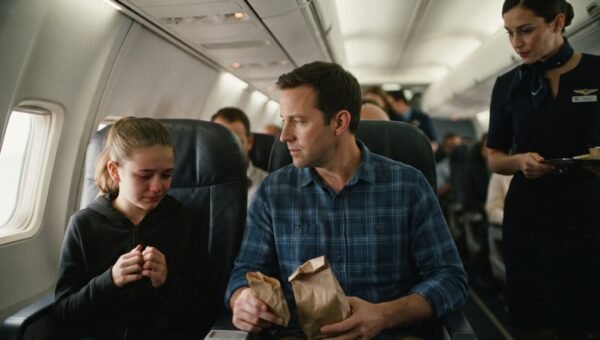
My hands were shaking so hard on the armrest that the man sitting across the aisle from me in 32C offered me a wet wipe and a plastic cup of ginger ale. I told him thank you, but I couldn’t drink it. My stomach felt like a hard knot of dry cement. At sixty-eight years old, I had never set foot on an airplane. My world had been the same four-cornered house in Ohio where I raised Chloe and buried my husband, Arthur, four years ago.
People in town always talked about Chloe with a kind of soft envy in their voices. Twelve years ago, she married a man named Min-jun whom she met during a semester abroad in Chicago. After the wedding, they packed their lives into four heavy suitcases and moved halfway across the world to Incheon, South Korea. They didn’t come back for weddings, they didn’t come back for funerals, and they didn’t come back for holidays. Flight tickets were too expensive, Chloe said on crackling Skype calls that dropped every three minutes.
But Chloe made sure nobody in our family felt forgotten. Every single year, without fail, a wire transfer landed in my bank account. One hundred thousand dollars. Clear as day.
When the first wire arrived eleven years ago, I stared at the bank statement until my eyes blurred. I called her up, my voice trembling with worry. I told her she couldn’t possibly afford to send me that kind of money, that she and Min-jun needed to save for a home and children.
She just laughed on the other end of the line, that bright, bell-like laugh I missed so much.
“Mom, stop worrying,” she told me then. “Min-jun’s family has real estate interests, and his import business in Seoul is doing exceptionally well. We have more than enough. You raised me alone after Dad passed, and now it is my turn to take care of you. Use it for your roof, use it for your medical checkups, use it for whatever makes your life easy.”
Year after year, the money kept coming. By the time Arthur died, that stream of cash had built a tidy cushion in my savings account. The ladies at the senior center at St. Jude’s would lean across the laminate tables during bingo and sigh. “Oh, Clara, you are the luckiest mother alive,” they would say. “Look at how your daughter honors you. A hundred thousand a year! Most kids won’t even call their mothers on Mother’s Day.”
I would smile and nod, clutching my plastic bingo chips. But inside, a hollow, aching coldness lived right beneath my ribs. Money cannot hug you on Christmas Eve. Money cannot sit across the kitchen table and share a pot of weak tea while you talk about the arthritis in your knees. A hundred thousand dollars does not fill the crushing, deafening silence of an empty house where a daughter used to leave muddy sneakers by the back door.
The decision to go didn’t come from a grand plan. It came on a Tuesday in November when I dropped a glass mug on the linoleum and it shattered into fifty glittering pieces. I stood there staring at the shards, realizing that if I slipped and broke my hip tomorrow, I would spend three days on the floor before the mailman noticed the piled-up circulars.
I didn’t want the money anymore. I wanted my girl. I didn’t tell her I was coming. I wanted it to be a real surprise, the kind where she bursts into tears of joy and throws her arms around my neck, and we leave the past twelve years behind us in a single afternoon.
I took four thousand dollars from my savings, went down to the travel agency by the courthouse, and let a young girl with bright green eyeliner book me a thirty-hour journey across the globe with two layovers.
When the taxi dropped me off in front of the address Chloe had sent me for her birthday card in October—a quiet residential neighborhood lined with neat brick row houses and low concrete walls in Incheon—my heart felt like it was trying to claw its way out of my throat. It was late afternoon, and a cold gray drizzle was starting to slick the pavement. My luggage wheels rattled loudly against the concrete as I walked up the three stone steps to the front door.
I raised my hand, my knuckles stiff with cold, and knocked twice.
No answer. I waited a moment, listening hard for footsteps or the bark of a dog. Nothing. I tried the brass handle, just to see if maybe she had left it unlatched while taking out the trash.
The latch gave a soft mechanical click and swung inward.
The door was completely unlocked.
I stepped across the threshold, pulling my heavy woolen coat tighter around my shoulders, and called out into the dim hallway. “Chloe? Honey, it’s Mom.”
The silence that rushed back to meet me wasn’t just quiet; it was dead. It felt like walking into a tomb. I dropped my canvas carry-on bag right there by the entryway, and the thud echoed off the bare walls with an eerie sharpness. The house smelled entirely of nothing. No scent of roasting garlic, no lingering trace of shampoo or laundry detergent, no human warmth at all.
I walked into the living room and literally froze in my tracks. There was a sofa covered in a pale gray slipcover, but no cushions had ever been indented by a human body. In the corner sat a tall ceramic vase holding a massive arrangement of stiff, dusty plastic orchids. A single floor lamp stood beside an empty coffee table that had a thick film of gray dust coating its glass top. There were no family pictures on the walls. No framed degrees from Ohio State. No clutter of daily life. No mail on the counter. No shoes by the door except for my own wet boots.
A cold shudder raced down my spine, sharp and sudden as a needle. This wasn’t a home where a happy married couple lived and worked. This looked like a stage set built by someone who had never actually stayed the night.
With my breath catching shallow in my chest, I turned toward the narrow wooden staircase at the end of the hall. Every step creaked under my weight as I climbed upward into the shadows, calling her name again into the empty air, my voice cracking with a rising terror I couldn’t control.
PART 2
I reached the landing on the second floor and found three white doors facing me. The first one stood slightly ajar. I pushed it open with the tip of my finger and stepped inside what was supposed to be the master bedroom.
The room was freezing. A heavy comforter was pulled tight and flat over a queen-sized bed, looking as though it had been arranged by a hotel maid who hadn’t returned in weeks. Against the far wall stood a large mahogany wardrobe. My fingers trembling, I pulled the double doors open.
Inside hung rows of women’s clothing. Sweaters, winter coats, blouses, and skirts, all hanging neatly on identical wooden hangers. I reached out and touched the sleeve of a blue wool coat that Chloe used to wear back in college. It was cold to the touch. But as I flipped through the hangers one by one, a horrifying realization hit me with the force of a physical blow.
Not one single item of men’s clothing hung in that closet. No suits. No shirts. No jackets. Min-jun’s entire wardrobe, everything that belonged to the man she had supposedly been building a life with for over a decade, was completely absent.
I backed out of the bedroom and stumbled down the narrow hallway toward the corner room, which Chloe’s emails had always described as Min-jun’s home office where he managed his thriving import business. The door was shut tight. I turned the knob and pushed it open, flipping the wall switch beside the frame.
A single overhead bulb flickered to life, casting a harsh yellow glare over a room that was entirely bare. There was no mahogany desk. No computer monitors humming with spreadsheets or international shipping invoices. No filing cabinets, no desk chair, no receipts, no books. The room was nothing four whitewashed walls and a bare wooden floor collecting dust motes in the corners.
There was not a single trace of Min-jun anywhere in this house. No photographs of a handsome Korean businessman from Chicago. No wedding pictures from their grand ceremony twelve years ago. Not even a single scrap of paper with his name on it.
Panic, cold and black, flooded my veins. If Min-jun didn’t live here, where was he? And if Min-jun didn’t live here, who had been sending me letters and phone calls all these years? Where was my daughter?
I stood alone in the empty hallway, the silence pressing down on my ears until they rang. My chest felt tight, the air refusing to go deep enough into my lungs. There was only one door left closed at the very end of the hall, half-hidden behind a dark velvet curtain that looked completely out of place against the modern drywall.
PART 3
I walked down the narrow hall, my footsteps sounding unnaturally loud on the uncarpeted floorboards. My hand reached out and touched the brass knob of the final door. It was locked.
I shook it gently, then banged my knuckles against the wood. “Chloe?” I cried out, my voice breaking into a ragged sob. “Chloe, please, open the door! It’s Mom! I know you’re here!”
From behind the wood came a muffled, frantic scraping sound, like fingernails dragging across cheap drywall, followed by a choked, wheezing gasp that made my blood run instantly cold.
Without thinking, I threw my shoulder against the cheap paneling once, twice, three times until the latch plate gave way with a sharp crack and the door burst inward.
I stumbled into the small, windowless room, and the breath was sucked completely out of my lungs. I fell to my knees on the linoleum floor, staring up in absolute horror.
There was no furniture in the room except for a thin cot in the corner and a plastic bucket in the shadows. Tied securely to a heavy metal radiator pipe by thick plastic zip-ties around her wrists was a woman. Her hair was matted and streaked with gray, her face hollowed out like a skeleton, and her cheeks stained with dried tracks of tears.
It took me ten agonizing seconds to recognize the deep brown eyes staring back at me in terror.
“Mom?” a voice whispered, so thin and cracked it sounded like dry leaves scraping across pavement. “Oh God… Mom, you shouldn’t have come here. He’s going to kill us both.”
It was Chloe. My real daughter. But she looked twenty years older, skin stretched tight over cheekbones, wearing a stained gray sweatshirt that hung off her emaciated shoulders like a sack.
I lunged forward, sobbing hysterically as I clawed at the thick plastic zip-ties biting raw into her wrists, tearing my own fingernails until they bled against the unyielding nylon. “I’m here, baby, I’m right here,” I cried, pulling a pair of small sewing scissors from my travel purse that airport security had somehow missed, frantically sawing at the heavy plastic until it finally snapped apart with a loud *pop*.
Chloe collapsed into my arms, sobbing so hard her whole body shook violently. I pulled her against my chest, rocking her back and forth on the cold floor while the smell of stale sweat and fear filled the tiny room.
“Who did this to you?” I choked out, stroking her tangled hair, my hands slick with her cold sweat. “Where is Min-jun? Where is your husband?”
Chloe gripped my coat so hard her knuckles turned white, her voice trembling in my ear. “There is no Min-jun, Mom. There never was. He died in a car crash six months after we got to Seoul. A drunk driver hit his taxi on the way home from the airport.”
A freezing wave washed over me. “Then… the money? Every year… the hundred thousand dollars… who sent it?”
Chloe squeezed her eyes shut, fresh tears spilling down her sunken cheeks. “It wasn’t him. It was a man named Park Jin-tae. He was Min-jun’s business partner. When Min-jun died, Park took everything. He took our apartment, he took our bank accounts, and then he took my passport. He locked me in this room twelve years ago.”
She looked up at me, her eyes wild with terror. “Every year, he made me sit at a small table in the corner and record videos on a laptop. He told me what to say. He told me to tell you how rich we were, how happy I was, and to wire money from my old American accounts that he forced me to clean out. But when the American money finally ran dry two years ago… he started demanding more. He used my name to take out massive corporate loans in the US, using your house and your savings as invisible collateral through digital identity theft. He kept sending you that hundred thousand dollars every single year, Mom… but it wasn’t my money. It was recycled cash from loans he was taking out in your name, trapping you in a web so you’d never come looking for me.”
Before I could process the monstrous scale of the trap, heavy footsteps echoed loudly on the stairs outside the door.
The floorboards groaned. A key rattled in the front lock downstairs.
ENDING
The front door clicked open, and a heavy set of footsteps began climbing the stairs, slow and steady, accompanied by the jangle of metal keys.
Terror hit me like a physical blow. I looked down at Chloe, whose eyes had widened into pools of absolute panic as she scrambled backward against the radiator pipe, whispering over and over that we were going to die here.
I didn’t run. For twelve years, I had sat alone in that quiet house in Ohio, letting fear and distance keep me away from my only child. I had let strangers tell me how lucky I was while my daughter was rotting away in a locked room twelve thousand miles from home. The grief that had hollowed out my chest since Arthur died suddenly hardened into something cold, heavy, and unbreakable.
I reached down and picked up the heavy plastic bucket from the corner of the room, gripping the wire handle with both hands.
The footsteps reached the top of the landing. The handle of the broken bedroom door turned, and a stocky, well-dressed Korean man in a dark wool overcoat stepped into the room, holding a plastic bag filled with cheap convenience store groceries.
He stopped dead in his tracks. His eyes darted from Chloe cowering against the radiator to me standing in the center of the room with the bucket raised high. For a split second, shock flickered across his smooth, unlined face. Then a cold, ugly smile spread across his lips as he reached inside his overcoat.
“Well,” Park Jin-tae said in fluent, accented English, his voice smooth as oil. “It seems the old woman from Ohio decided to check her investment portfolio in person. A very expensive mistake, Mrs. Miller.”
He pulled a heavy silver stun gun from his pocket, the twin prongs snapping with a sharp, blue electric spark that lit up the dim corners of the room.
He took a step forward, his eyes fixed on me with cold calculation. But he had miscalculated one very important thing. He thought I was just an old widow from Ohio who didn’t know how to fight for what belonged to her.
As he lunged forward to raise the weapon, I didn’t flinch. I swung the heavy plastic bucket with every ounce of accumulated rage, grief, and twelve years of stolen motherhood I had locked inside my bones, smashing it directly into the side of his head with a sickening crack.
Park staggered sideways, dropping the stun gun as he collided hard against the bare drywall before collapsing in a crumpled heap on the floorboards, completely unconscious.
I stood over him, my chest heaving, my hands steady for the first time in twelve years. I dropped the bucket, turned to my daughter, and pulled her up into my arms.
“Come on, baby,” I whispered fiercely against her hair, wiping the tears from her cheeks with my thumb. “We’re going home.”
Within three hours, the Incheon district police and American consular officials were swarming the quiet row house. Park Jin-tae was arrested before he regained consciousness, his network of shell companies and fraudulent loans unraveling within days as international investigators traced the digital trail straight back to his accounts.
Two weeks later, Chloe and I boarded a flight back to Ohio. She sat in seat 32C beside me, wrapped in three warm woolen blankets, resting her head softly against my shoulder as the massive jet engines roared down the runway and lifted us up into the bright morning sky.
My house in Ohio is quiet again, but the silence doesn’t feel empty anymore. The money is gone, every last cent of the fraudulent debt has been wiped clean by federal investigators, and we have to start over from scratch. But as I watch Chloe sit at the kitchen table drinking a cup of hot tea and laughing at a silly local news segment on TV, I know the absolute truth.
Money can’t hug you on Christmas. But a mother’s arms can pull her child back from the edge of the world, and that is worth more than all the gold on earth.